
ScraperAPI
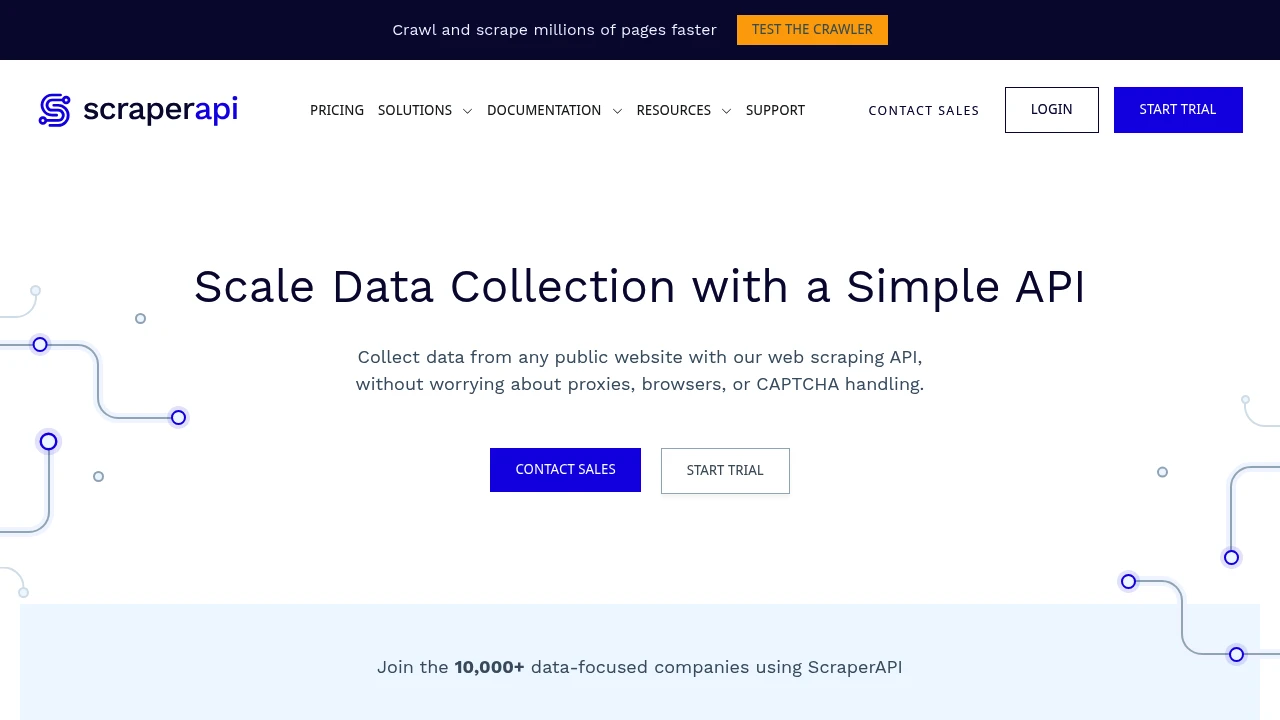
ScraperAPI is a web scraping API that collects data from any public website without managing proxies, browsers, or CAPTCHAs. Offers structured endpoints, async scraping, and 40M+ proxy pool.
ScraperAPI
Summary
ScraperAPI is a web scraping API platform that collects data from any public website via a single API call, automatically handling proxy rotation, CAPTCHA solving, and browser rendering. Serves 10,000+ companies and processes over 11 billion requests monthly.
What is ScraperAPI?
ScraperAPI provides a plug-and-play web scraping solution that eliminates the need to build proxy infrastructure or handle anti-bot mechanisms. The platform includes a general Scraping API, structured endpoints for popular sites (returning JSON data), an Async Scraper for bulk requests, and a no-code DataPipeline tool. Global proxy pool spans 50+ countries for geotargeting needs.
Core Capabilities
- Scraping API: Single API call handles proxy rotation, CAPTCHA solving, and JavaScript rendering
- Structured endpoints: Get JSON-formatted data directly from Amazon, Google, Walmart, and more
- Async Scraper: Send millions of requests in bulk and receive results asynchronously
- DataPipeline: No-code automation tool for data collection workflows
- Geotargeting: 40M+ proxy pool across 50+ countries
- Enterprise support: Dedicated team and Slack channel access
Pros
- Saves development time by eliminating proxy management and CAPTCHA handling
- Structured endpoints return clean JSON data, skipping HTML parsing work
- High success rates and fast response times even for difficult sites
- Global proxy pool supports precise geotargeting
- GDPR and CCPA compliant
Cons
- Pricing based on request volume; costs can add up at scale
- Structured endpoints limited to specific popular sites (Amazon, Google, Walmart, etc.)
- Free tier has limited quota; production use requires paid plans
- Reliance on third-party service means less control over scraping infrastructure
Decision Guidance
Use ScraperAPI when: You need to scale web scraping quickly without maintaining proxy infrastructure; you want structured data from Amazon, Google, or similar sites; you prefer to reduce development costs and focus on data application rather than extraction.
Consider alternatives if: You need full control over scraping logic or already have a mature proxy system; your budget is extremely tight and scraping volume is massive; target sites are very niche and not covered by structured endpoints.
Frequently Asked Questions

Similar to ScraperAPI


