ActiveCampaign Alternatives
Discover the best alternatives to ActiveCampaign. Compare features, pricing, and find the perfect replacement.
The best alternative to ActiveCampaign is Customer.io. If that doesn't suit you, we've compiled a ranked list of other ActiveCampaign alternatives to help you find a suitable replacement. Other interesting alternatives to ActiveCampaign are: Salesforce, Pardot, Omnisend and Moosend.
ActiveCampaign alternatives are mainly AI Email Outreach, but may also be AI CRM or AI Multichannel Outreach. Browse these if you want a narrower list of alternatives.

Written by Eric Leung
Last updated: May 29, 2026 at 8:00 AM
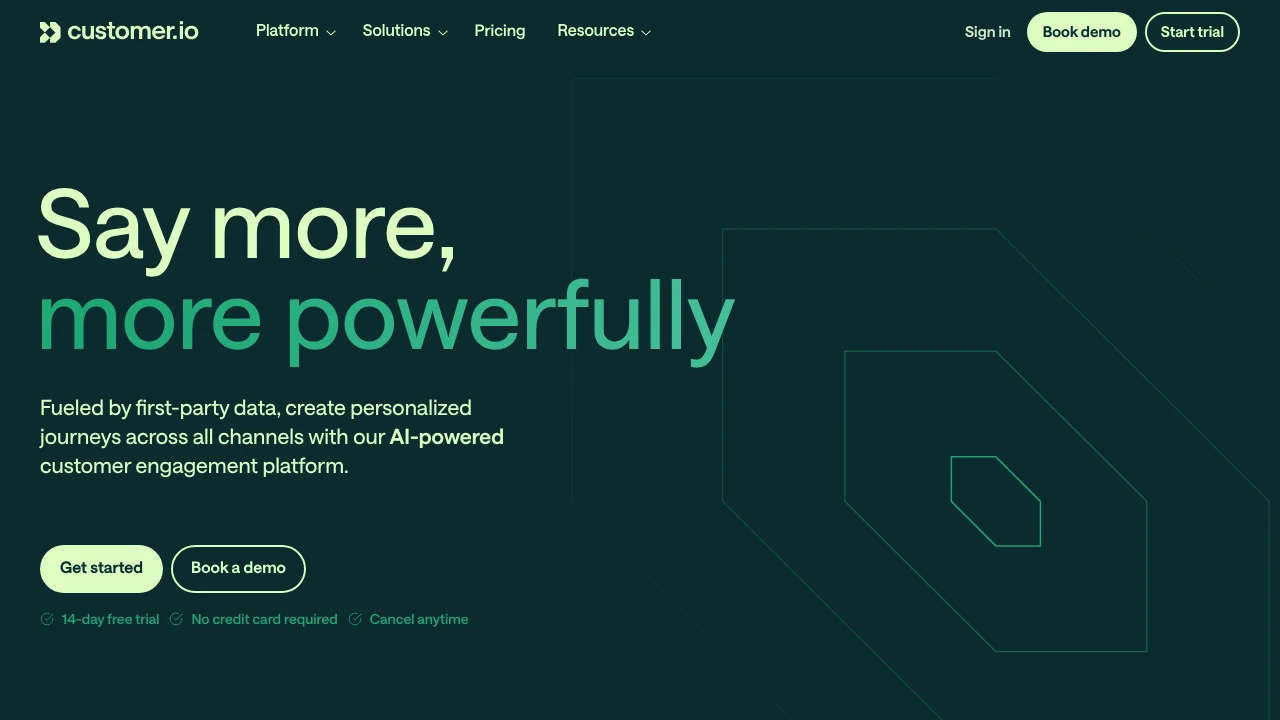
Customer.io is an AI-powered customer engagement platform that unifies data management, workflow automation, and omnichannel messaging (email, SMS, push, in-app) to build personalized journeys. 14-day free trial available.
Summary
Customer.io is a data-driven customer engagement platform that unifies first-party data management, AI-powered workflow automation, and omnichannel messaging to build personalized customer journeys. Trusted by 9,000+ brands worldwide.
What is Customer.io?
Customer.io is a unified customer engagement platform that lets you manage data, design automated journeys, and deliver personalized content across email, SMS, push, in-app messaging, and more—all in one system. Built on first-party data, it offers a visual workflow builder, AI-driven insights, and unlimited data integrations, scaling from startups to enterprise teams.
Core Capabilities
- Visual workflow builder: Drag-and-drop interface to design automated journeys with unlimited attributes and event triggers
- Omnichannel messaging: Unified management of email, SMS, push, in-app messages, and webhooks
- AI-powered insights: Automatically discover audience opportunities, optimize messaging, and track conversion goals
- Unlimited data integrations: APIs, webhooks, Reverse ETL (Snowflake, BigQuery), ad audience sync (Google, Facebook)
- Design Studio: Collaborative message editor with A/B testing and cohort experimentation
- Custom objects & events: Trigger messages based on complex data like companies, courses, or properties
Pros
- Unified platform integrates data management, automation, and messaging, reducing tech stack complexity
- Visual editor and AI recommendations lower operational overhead and accelerate marketing execution
- Unlimited data sources and destinations with native Reverse ETL and data warehouse support
- 99.99% platform uptime, ISO 27001, SOC 2 Type II, GDPR, HIPAA compliant
- 14-day free trial, no credit card required, cancel anytime
Cons
- Pricing not publicly disclosed; requires contacting sales for quotes
- Advanced features (custom objects, Reverse ETL) have a steeper learning curve
- Some users report initial data integration setup requires technical support
- May be overkill for small teams needing only basic email marketing
Decision Guidance
Use Customer.io when: You need to unify first-party data and build complex automated journeys for growth-stage or enterprise teams; you prioritize omnichannel consistency and data warehouse integration; you want AI to accelerate insights and content optimization.
Consider alternatives if: You only need basic email marketing on a tight budget—try Mailchimp or Brevo; your primary need is transactional email—SendGrid or Postmark are more cost-effective; your team lacks technical resources for complex integrations—Klaviyo or ActiveCampaign may be easier to onboard.

Looking for alternatives to other popular services? Check out other posts in the alternatives series and GTM Guide, a directory of tools with filters for tags and alternatives for easy browsing and discovery.

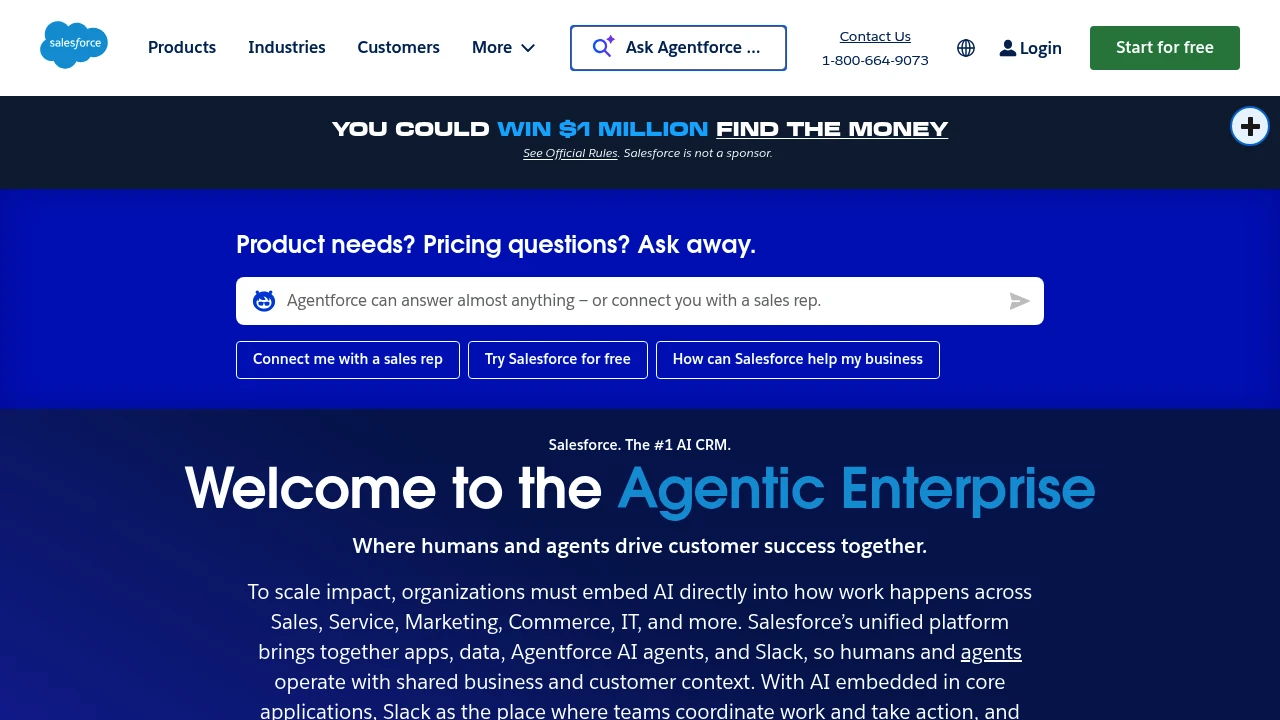
Salesforce is the leading AI CRM platform, integrating sales, service, marketing, commerce, and IT apps. With Agentforce AI agents and unified data, businesses achieve Customer 360 management, higher conversion rates, and automation efficiency.
Salesforce: AI CRM Platform
Summary
Salesforce is the leading AI CRM platform that unifies sales, service, marketing, commerce, and IT apps. Through Agentforce AI agents and integrated data, it enables human-agent collaboration to drive customer success and business growth.
What is Salesforce?
Salesforce is a cloud-based customer relationship management (CRM) platform that brings together applications, data, AI agents, and Slack into a single system. Businesses use Customer 360 to manage customer interactions from lead generation to post-sale service, enabling cross-department collaboration and automated workflows. The platform includes Agentforce AI agents that autonomously execute multi-step tasks, reducing manual work and boosting efficiency.
Core Capabilities
- Agentforce AI agents: Automate customer service cases, lead qualification, and marketing campaigns with 66% autonomous case resolution
- Customer 360 platform: Unify sales, service, marketing, commerce, and IT data for complete customer visibility
- Slack integration: Team collaboration hub with Slackbot as a personal work agent to accelerate decisions and actions
- Industry solutions: 16+ pre-built solutions for finance, healthcare, retail, manufacturing, and more
- Free CRM: Core CRM features with no credit card required, ideal for small businesses to start fast
- AI prediction and personalization: Analyze customer behavior, forecast deal success, and automate personalized interactions
Pros
- Deeply integrated platform: Apps, data, AI agents, and metadata managed in one place, reducing system fragmentation
- Proven AI results: Customer cases show 15% marketing pipeline growth and 1.8x lead conversion rate improvement
- Flexible scalability: From free tier to enterprise plans, expand features as your business grows
- Built-in trust and governance: AI and data security, compliance, and reliability mechanisms enabled by default
- Free learning resources: Agentblazer training offers three-level AI skill certification at no cost
Cons
- Learning curve: Feature-rich platform requires time for new users to master full capabilities and best practices
- Cost accumulation: Advanced features and industry solutions can drive subscription costs up quickly for SMBs
- Customization complexity: Deep customization demands technical resources or external consultant support
- Network dependency: Cloud architecture requires stable internet; offline functionality is limited
- Third-party integration: Some external system integrations need extra configuration or middleware
Decision Guidance
When to use: Businesses needing unified sales, service, and marketing process management; teams wanting AI agents to automate repetitive tasks and elevate customer experience; growing companies seeking scalable CRM solutions.
Consider alternatives: Micro-businesses with tight budgets needing only basic CRM features; organizations requiring fully offline operation; companies deeply invested in other ecosystems (e.g., Microsoft Dynamics) where integration costs are prohibitive.

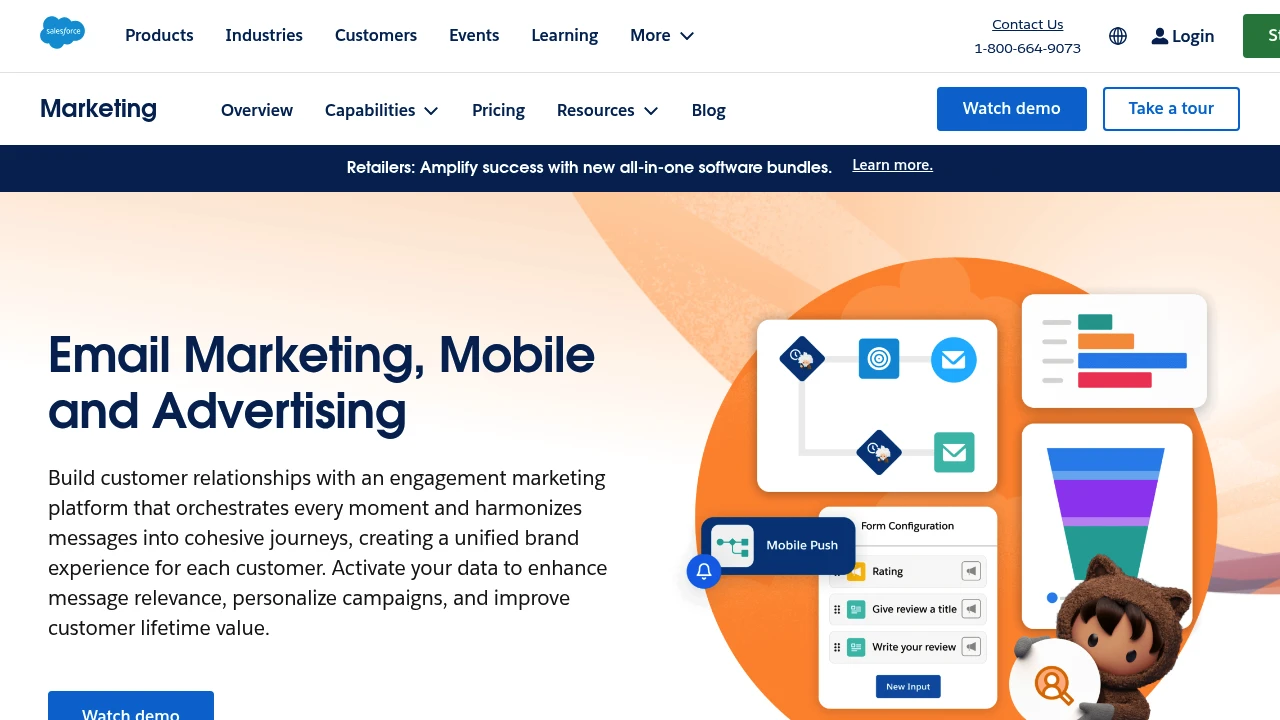
Salesforce Marketing Cloud Engagement unifies email, SMS, WhatsApp, push, and digital ads. Use AI-powered Journey Builder to orchestrate personalized customer journeys and boost lifetime value.
Summary
Salesforce Marketing Cloud Engagement is an enterprise multi-channel marketing automation platform that integrates email, SMS, WhatsApp, push notifications, and digital advertising to help brands orchestrate personalized journeys across the customer lifecycle and increase customer lifetime value.
What is Salesforce Marketing Cloud Engagement?
Salesforce Marketing Cloud Engagement (formerly ExactTarget) is Salesforce's engagement marketing platform that enables marketing teams to design and execute personalized customer journeys across email, mobile messaging, WhatsApp conversations, and digital advertising. The platform features Journey Builder drag-and-drop editor, AI-powered send-time optimization, dynamic content blocks, and cross-CRM integrations, supporting full lifecycle marketing from lead nurturing to loyalty programs.
Core Capabilities
- Email Marketing: Reusable content blocks, A/B testing, dynamic content, and real-time sender reputation management
- Mobile Messaging: SMS, WhatsApp Business Platform, app push notifications, and geolocation triggers
- Journey Builder: Drag-and-drop journey orchestration with API triggers, cross-channel decisioning, and prebuilt templates
- AI Features: Generative AI subject lines and copy, predictive send times, product recommendations, and engagement frequency optimization
- Digital Advertising: First-party data activation to Google, Meta, LinkedIn, and more, with audience suppression
- Cross-CRM Integration: Native connections to Salesforce Sales Cloud, Service Cloud, and Loyalty Management
- Analytics Dashboards: Built-in cross-channel reporting, custom filters, and performance tracking
Pros
- Native Salesforce CRM integration delivers unified customer view across marketing, sales, and service
- Enterprise-grade scalability supports high-volume email sends and high-velocity data ingestion
- Built-in AI tools (Agentforce Campaign Creation) automate subject line generation and send optimization
- Supports WhatsApp and SMS two-way conversations plus in-app messaging
- Rich Trailhead learning resources and community support
Cons
- High pricing starts at $1,500/month (billed annually), creating barrier for SMBs
- Steep learning curve requires time investment to master Journey Builder and AMPscript
- Advanced features (path experimentation, two-way conversations) require upgrade to Advanced edition
- Some users report complex interface requiring technical support for initial setup
- Advertising audience sync depends on third-party platform APIs, occasional delays
Decision Guidance
When to use: Enterprises already on Salesforce CRM that need to orchestrate complex customer journeys across email, mobile messaging, and advertising, with enterprise-grade scalability and AI-driven personalization. Ideal for large marketing teams in retail, financial services, travel, and similar industries.
Consider alternatives: If budget is limited or team size is small, consider HubSpot, Mailchimp, or ActiveCampaign for entry-level platforms. If not using Salesforce CRM ecosystem, Adobe Marketo Engage or Braze may offer more flexible integration options.

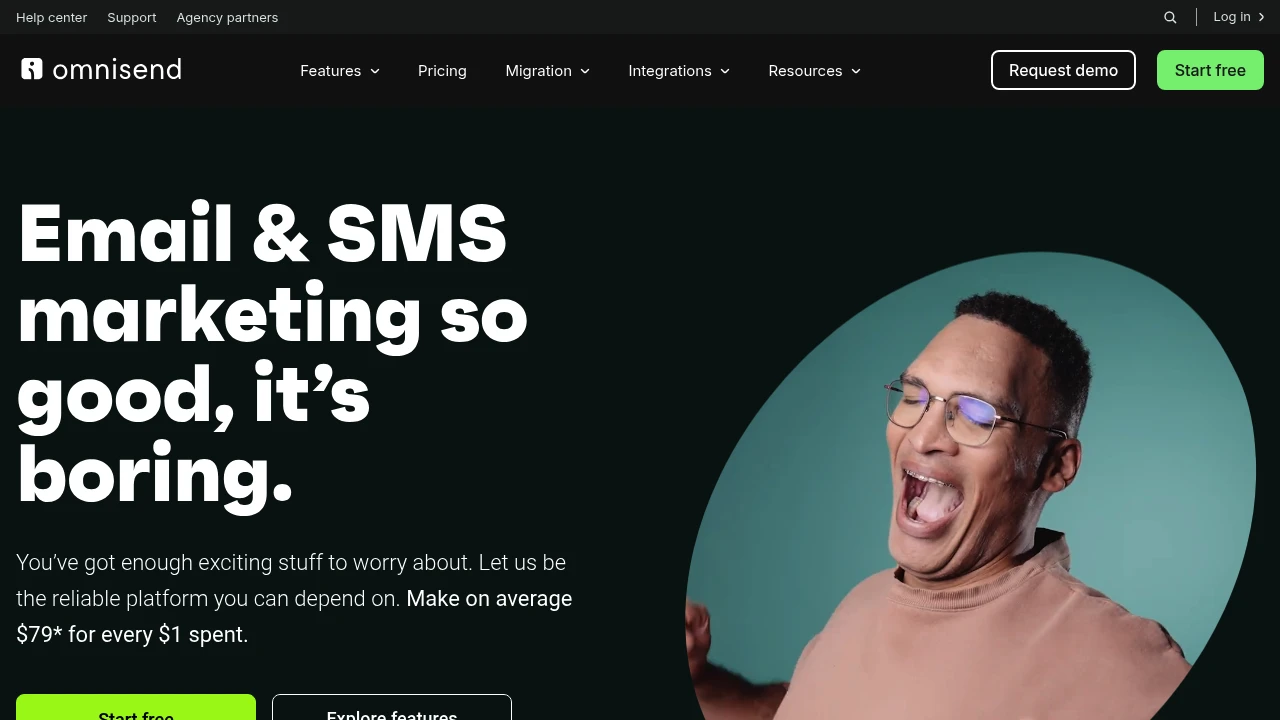
Omnisend combines email, SMS, and automation for ecommerce brands. Pre-built workflows, real-time segmentation, 160+ integrations, and 24/7 support.
Summary
Omnisend is an email and SMS marketing automation platform built for ecommerce brands, helping online stores drive sales and save time through pre-built workflows, audience segmentation, and multi-channel integrations.
What is Omnisend?
Omnisend is a marketing platform that integrates email, SMS, and web push notifications for ecommerce businesses. It offers pre-built automation workflows (like cart abandonment, welcome series), real-time segmentation, and over 160 ecommerce tool integrations, letting you manage multi-channel campaigns from one interface. All templates are customizable to match your brand, and reporting includes heatmaps and A/B testing analytics.
Core Capabilities
- Email and SMS integration: Send email and SMS from one platform with fully customizable templates
- Pre-built automation workflows: Ready-to-use flows for cart abandonment, welcome series, post-purchase follow-ups
- Real-time segmentation: Auto-updating audience groups based on shopping behavior and campaign activity
- List growth tools: Pop-ups and discount code forms to capture visitor contact details
- Ecommerce platform integrations: One-click connection with Shopify, WooCommerce, and 160+ apps
- Reporting and analytics: Heatmaps, conversion tracking, A/B testing, and revenue attribution reports
Pros
- Email combined with SMS shows 47.7% higher conversion rates
- Pre-built automations launch quickly, setup complete in 30 minutes
- 24/7 customer support with Stevie Award recognition and 5,000+ five-star reviews
- Smooth integration with major ecommerce platforms, no technical skills required
- Unlimited segmentation with real-time updates for precise targeting
Cons
- Pricing scales with contact count and SMS usage, higher costs for large lists
- Advanced features (like complex automation logic) require learning time
- SMS service coverage and pricing vary by market
- Some users find template customization less flexible than professional design tools
- Free plan is limited; full automation and SMS require paid upgrade
Decision Guidance
Use Omnisend if: You're a small to mid-sized ecommerce brand needing integrated email and SMS marketing, want to quickly launch automation workflows to recover abandoned carts and boost repeat purchases, and value quality customer support.
Consider alternatives if: You have a very large contact list on a tight budget, need highly customized automation logic, or rely primarily on email rather than multi-channel campaigns—compare pricing and features with specialized tools.
Moosend offers email marketing automation, A/B testing, landing pages, and subscription forms to manage campaigns, increase engagement, and grow your business.
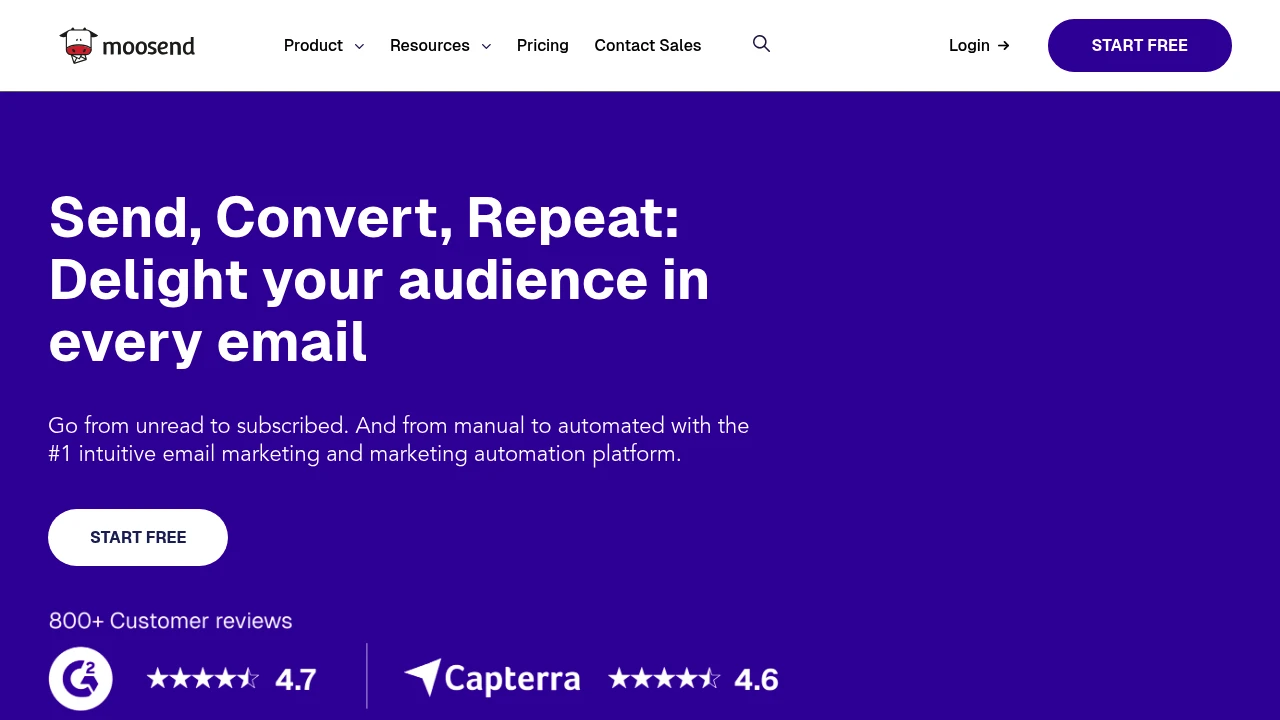
Moosend Email Marketing & Automation Platform
Moosend is an email marketing and automation platform designed for small to mid-sized businesses and marketing teams, solving time-consuming manual processes and low engagement.
What is Moosend?
Moosend is an integrated email marketing tool offering unlimited email sends, marketing automation, landing pages, and subscription forms. The platform uses an intuitive interface and AI-powered suggestions to help users quickly build, test, and optimize campaigns, while triggered emails and customer journey automation boost conversions.
Core Capabilities
- Email marketing: Customizable templates, dynamic content, and A/B testing
- Marketing automation: Triggered emails, customer journeys, and task automation
- Landing page builder: 130+ professional templates, no coding required
- Subscription forms: Collect customer data and preferences for precise segmentation
- Analytics & reporting: Real-time tracking of open rates, click rates, and conversions
- Integrations: Connect third-party apps without coding
- SMTP server & transactional emails: Support for technical email delivery
Pros
- Affordable pricing: Starts at $7/month with unlimited email sends
- Intuitive interface: Users report a friendly UI and low learning curve
- Powerful automation: Supports complex customer journeys and triggered campaigns
- 24/5 support: Live chat and email support available
- Rich template library: 130+ professionally designed templates ready to use
Cons
- Advanced features require paid plans: Features like SSO and SAML limited to higher tiers
- Limited integrations: Fewer third-party integrations compared to competitors
- Support not 24/7: Only 24/5 support; weekend delays possible
- Learning resources mainly in English: Limited resources in other languages
Decision Guidance
When to use: Small to mid-sized businesses or marketing teams need an affordable, feature-complete email automation tool, especially valuing unlimited sends and an intuitive interface.
Consider alternatives: If you need more third-party integrations, 24/7 support, or enterprise-grade advanced features (like deep CRM integration), explore other platforms.
Looking for alternatives to other popular services? Check out other posts in the alternatives series and GTM Guide, a directory of tools with filters for tags and alternatives for easy browsing and discovery.

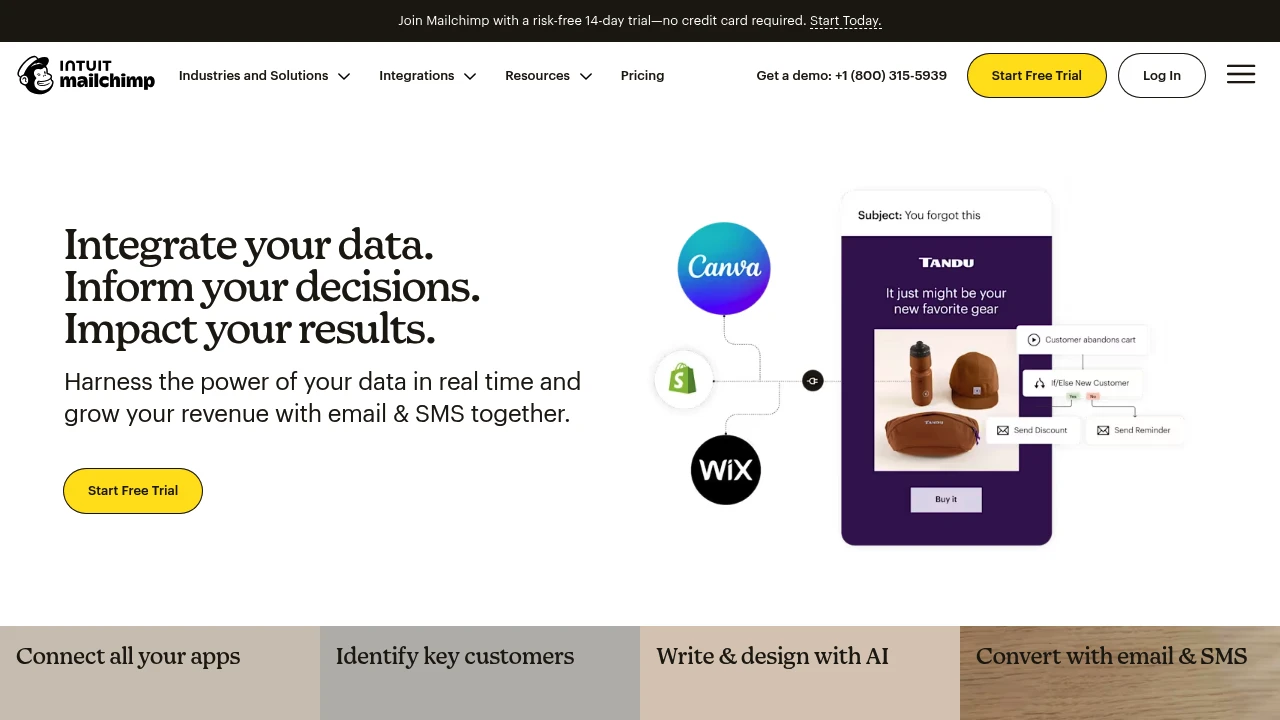
Mailchimp is an AI-powered email and SMS marketing platform offering predictive segmentation, automation, 300+ integrations, and a free plan to boost conversions and ROI.
Summary
Mailchimp is an integrated email and SMS marketing automation platform that uses AI and real-time data to help small and medium businesses boost conversions and revenue. It offers predictive segmentation, generative AI content tools, and 300+ integrations for e-commerce and omnichannel marketing.
What is Mailchimp?
Mailchimp is a data-driven email and SMS marketing platform designed for SMBs and e-commerce. It unifies customer data, behavioral tracking, and third-party apps (Shopify, Salesforce, WooCommerce), then uses AI tools to auto-generate personalized content, identify high-value customers, and optimize send times. Free plan and 14-day Standard trial available, no credit card required.
Core Capabilities
- Email & SMS marketing: Dual-channel reach, up to 97% higher click rates
- AI content generation: Auto-write and design emails; 9.8 billion AI-generated emails sent
- Predictive segmentation: Intelligently identifies customers most likely to engage
- Marketing automation: Trigger personalized workflows based on user behavior
- 300+ integrations: Connect Shopify, Canva, Google Analytics, QuickBooks, and more
- Analytics dashboards: Track audience growth, conversion funnels, and ROI
- Custom forms & popups: Capture leads with customizable signup tools
- Transactional email: 99.99% delivery rate
Pros
- Free plan and 14-day risk-free trial (no credit card)
- AI-driven content and segmentation save time
- Deep e-commerce integrations: Shopify and WooCommerce users see up to 30x ROI
- Intuitive interface for non-technical users
- Personalized onboarding included with Standard and Premium plans
Cons
- Pricing scales quickly with contact count; expensive for large lists
- SMS available in select countries only, requires separate credit purchase
- Advanced automation and custom templates require paid plans
- Free plan limited to 1,000 emails/month and 500 contacts
- Customer support on free plan is email-only, no live chat
Decision Guidance
Use Mailchimp if: You're an SMB or e-commerce business needing integrated email, SMS, and analytics, want AI-powered automation to boost conversions, and already use Shopify, WooCommerce, or similar platforms. Great for startups testing the free plan or 14-day Standard trial.
Consider alternatives if: You need more flexible pricing (e.g., pay-per-send), more powerful advanced automation, or your primary market is in countries where SMS is restricted. Explore ActiveCampaign, Klaviyo, or Brevo instead.

Klaviyo is a B2C CRM platform that unifies AI email marketing, SMS, WhatsApp, and customer service. Automate content, personalize omnichannel experiences, and drive revenue growth.
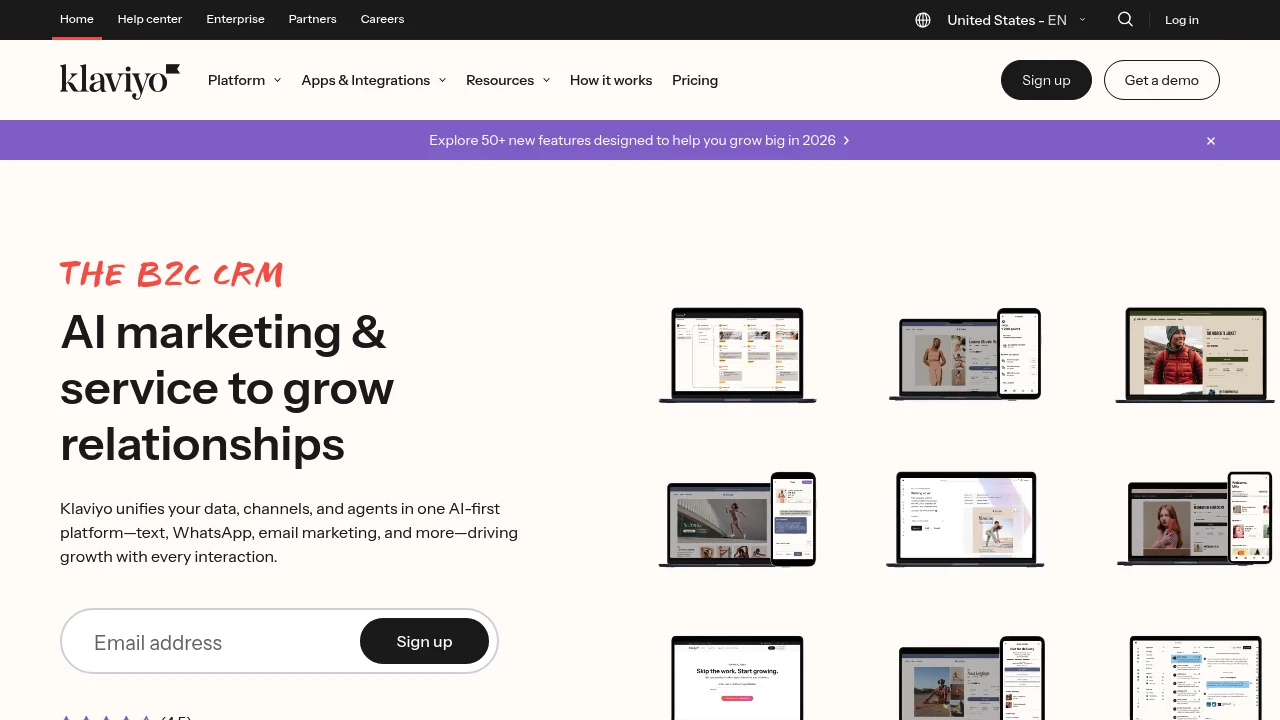
Klaviyo
Klaviyo is an AI-powered B2C CRM platform that unifies email marketing, SMS, WhatsApp, and customer service, solving data fragmentation and channel silos for consumer brands.
What is Klaviyo?
Klaviyo combines marketing, customer service, and analytics in one platform. K:AI Marketing Agent auto-generates branded content, while K:AI Customer Agent delivers 24/7 support. Built-in CDP unifies customer data, 350+ app integrations connect your stack, and real-time personalization powers ecommerce and B2C growth.
Core Capabilities
- AI Agents: K:AI Marketing Agent creates content; K:AI Customer Agent handles queries and product suggestions
- Omnichannel marketing: Manage email, SMS, WhatsApp, RCS in one place
- Customer Data Platform (CDP): 360-degree customer view, unified data sources
- Klaviyo Helpdesk: Turn service conversations into revenue opportunities
- Analytics & attribution: Multi-touch attribution, real-time campaign tracking
- 350+ integrations: Connect ecommerce platforms, payment tools, and business apps
Pros
- AI agents automate content creation and customer service, reducing manual work
- Unified platform for marketing, service, and data—no tool-switching
- Multi-channel personalization boosts customer engagement
- Built-in CDP delivers complete customer profiles for smarter decisions
- User-friendly for beginners and experts alike
Cons
- Initial setup requires time to integrate data sources and configure workflows
- Advanced features have a learning curve, especially automation and segmentation
- Pricing scales with contact count, potentially costly for growing SMBs
- Customer support response times vary according to some users
- Primarily built for ecommerce and B2C; limited B2B functionality
Decision Guidance
Use Klaviyo when: You're an ecommerce brand needing a unified marketing and service platform, want AI to automate content and customer interactions, and need to integrate multi-channel data to boost retention and revenue.
Consider alternatives if: Your business is primarily B2B, you need more flexible pricing, or you already have a mature CRM and only need a single-channel marketing tool.

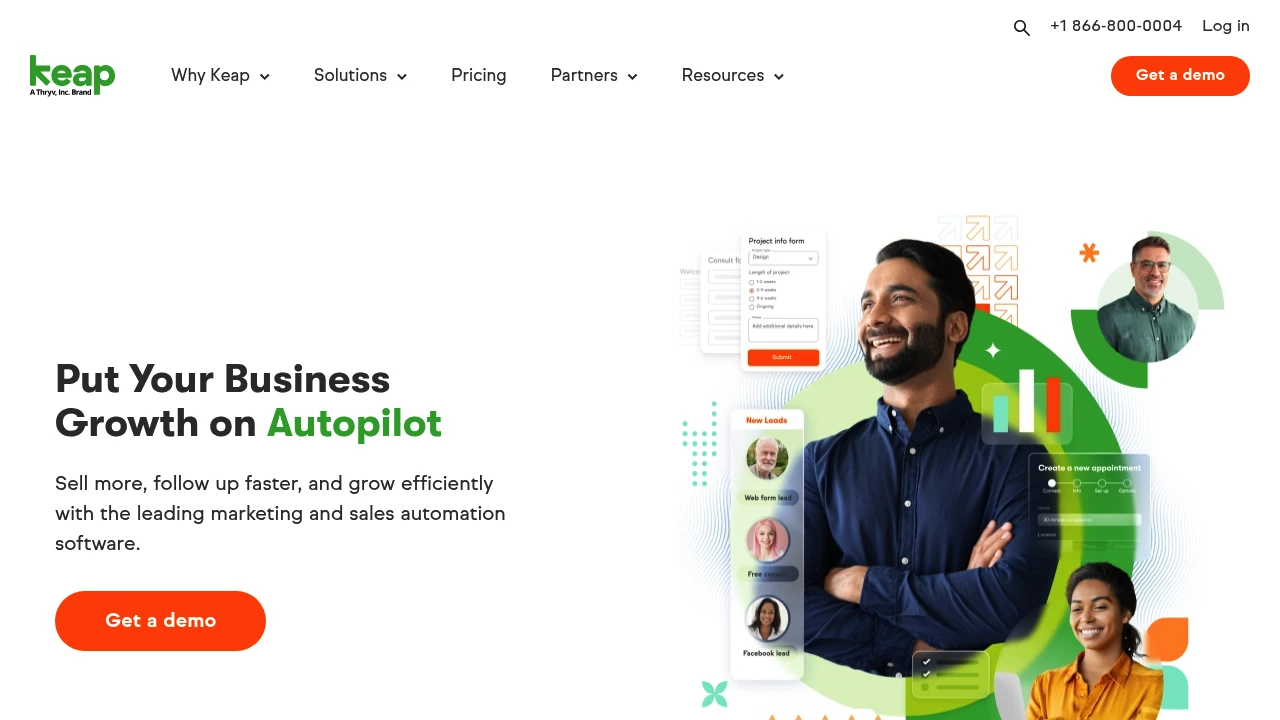
Keap is a CRM and automation platform built for small businesses. Integrate marketing, sales, and customer management with drag-and-drop tools, 5,000+ integrations, and proven templates.
Summary
Keap is a CRM and automation platform designed for small businesses to save time, follow up faster, and scale systematically. With drag-and-drop automation, you reduce manual tasks and focus on sales and relationships.
What is Keap?
Keap is a platform that combines customer relationship management (CRM), marketing automation, and sales automation, serving over 200,000 small businesses. It lets you automate follow-ups, email marketing, lead nurturing, and customer service through visual workflows, with over 5,000 integrations to connect your existing tools. The platform includes AI features and pre-built automation templates to lower setup barriers.
Core Capabilities
- Drag-and-drop automation builder: Design marketing, sales, and service workflows without coding
- CRM and contact management: Centralize lead, customer data, and interaction history
- Email and SMS marketing: Automate personalized messaging and follow-up sequences
- Sales pipeline tracking: Visualize deal progress and sales stages
- Pre-built automation templates: Quickly deploy proven marketing and sales processes
- 5,000+ integrations: Connect payment, e-commerce, social media, and third-party tools
- Reporting and analytics: Track revenue, lead sources, and automation performance
Pros
- Built for small businesses: Features and pricing optimized for small teams without enterprise complexity
- Significant time savings: Users save an average of 10 hours per week on manual work
- Full customer journey automation: Handle lead capture to post-sale service in one platform
- Rich support resources: Implementation help, migration services, partner network, and community
- Mature platform: 20+ years of operation with extensive success stories and best practices
Cons
- Steeper learning curve: New users need time to master automation logic and feature depth
- Higher price point: More expensive than basic CRM tools, potentially heavy for micro-businesses
- Traditional interface: Some users report UI design less modern than newer competitors
- Advanced features require upgrades: Certain high-level automation and reporting limited to premium plans
- Complex integration setup: While many integrations exist, configuration may require technical support
Decision Guidance
Use Keap if: You're a small business or solo entrepreneur needing integrated CRM, email marketing, and sales automation in one platform, and willing to invest time learning for long-term efficiency gains. Ideal for coaches, consultants, e-commerce, and service businesses.
Consider alternatives if: You only need basic CRM or email tools, have a tight budget, or run a very small team (1-2 people) with simple workflows. Look at HubSpot Free, Mailchimp, or Pipedrive for lighter options. For enterprise-grade features and customization, Salesforce or HubSpot Enterprise are better fits.

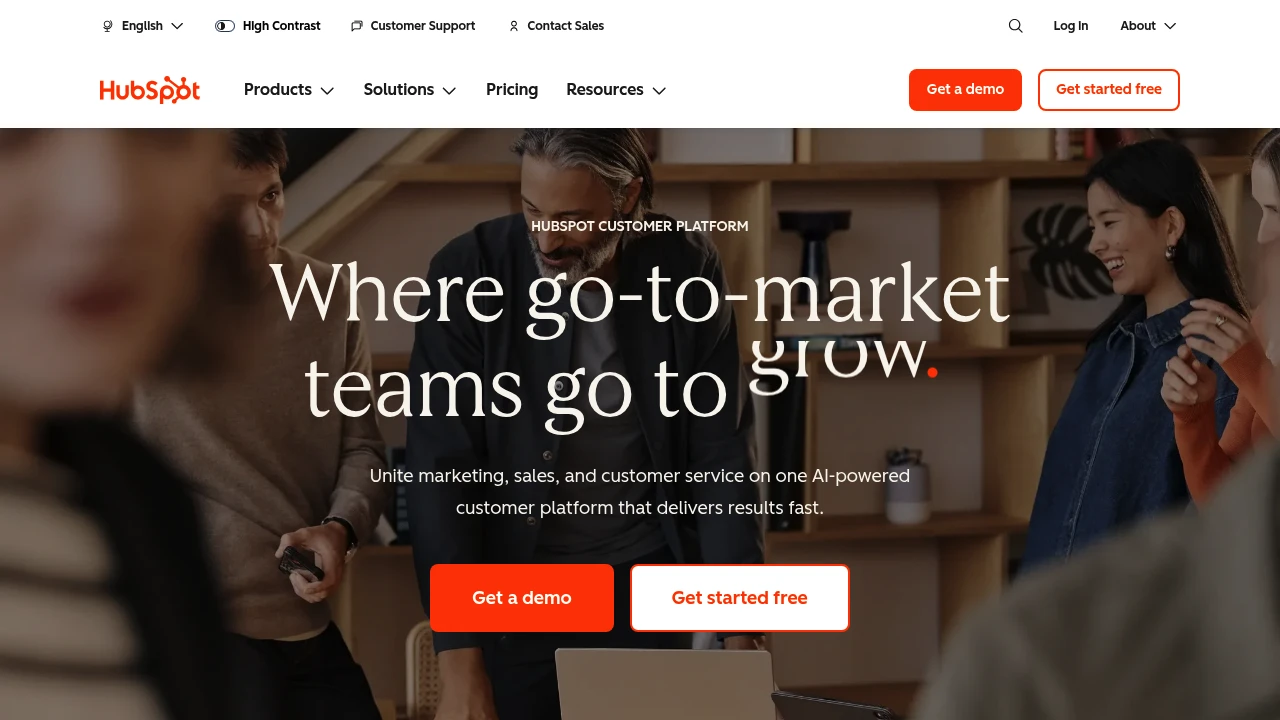
HubSpot integrates CRM, marketing, sales, and customer service on one AI-powered platform with Breeze agents that automate workflows, helping 278,000 businesses grow faster.
Summary
HubSpot is an AI-powered customer platform that unifies marketing, sales, customer service, and CRM to help businesses consolidate data, automate processes, and accelerate growth.
What is HubSpot?
HubSpot is a comprehensive customer platform that combines Marketing Hub, Sales Hub, Service Hub, Content Hub, Data Hub, Commerce Hub, and Smart CRM in a single system. The platform includes built-in Breeze AI tools and agents (Customer Agent, Prospecting Agent, Data Agent) that automate customer inquiries, sales outreach, and content creation. Over 278,000 businesses across 135 countries use HubSpot to manage customer relationships and drive business growth.
Core Capabilities
- Smart CRM: Unified customer data as the single source of truth for all business information
- Marketing Hub: Marketing automation, lead conversion, personalized content, and campaign tracking
- Sales Hub: Lead generation, pipeline management, automated outreach, and deal acceleration
- Service Hub: AI-powered customer support, ticketing, customer health scores, and usage analytics
- Content Hub: Content creation, multi-channel publishing, and brand consistency management
- Breeze AI Agents: 24/7 automation for customer inquiries (resolves 65%), sales research, and content generation
- Data Hub: Data integration, cleansing, and cross-team activation
- Commerce Hub: Quoting, payment collection, and subscription management
- 2,000+ Integrations: Connect existing tools and applications
Pros
- Unified platform: All marketing, sales, and service tools in one AI-powered system eliminate data silos
- Proven results: Customers gain 129% more leads, 36% more deals, and 37% better ticket closure rates within one year
- Built-in AI: Breeze agents automate 65% of customer inquiries, accelerate sales outreach, and generate content
- Flexible scaling: From Small Business Bundle to Enterprise plans, adapts to different team sizes
- Rich ecosystem: 2,000+ integrations, free tools, and active community support
Cons
- Learning curve: Multi-product platform requires time to master all features and best practices
- Cost accumulation: Advanced features and multiple Hub subscriptions can strain budgets for small businesses
- Customization limits: Some enterprise-level needs may require additional development or third-party integrations
- Data migration: Moving from other CRM systems requires planning and resource investment
- Feature overlap: Some functionality overlaps across different Hubs, requiring careful plan selection
Decision Guidance
Use HubSpot when: You need to unite marketing, sales, and customer service teams and want AI automation to boost efficiency and accelerate growth. Particularly suited for small to enterprise organizations seeking an integrated platform to replace scattered tools, valuing data unification and scalability.
Consider alternatives when: You only need single functionality (like pure CRM or email marketing) rather than a full platform, or have limited budget without need for advanced AI features. Businesses deeply invested in other ecosystems (like Salesforce) may face migration costs.

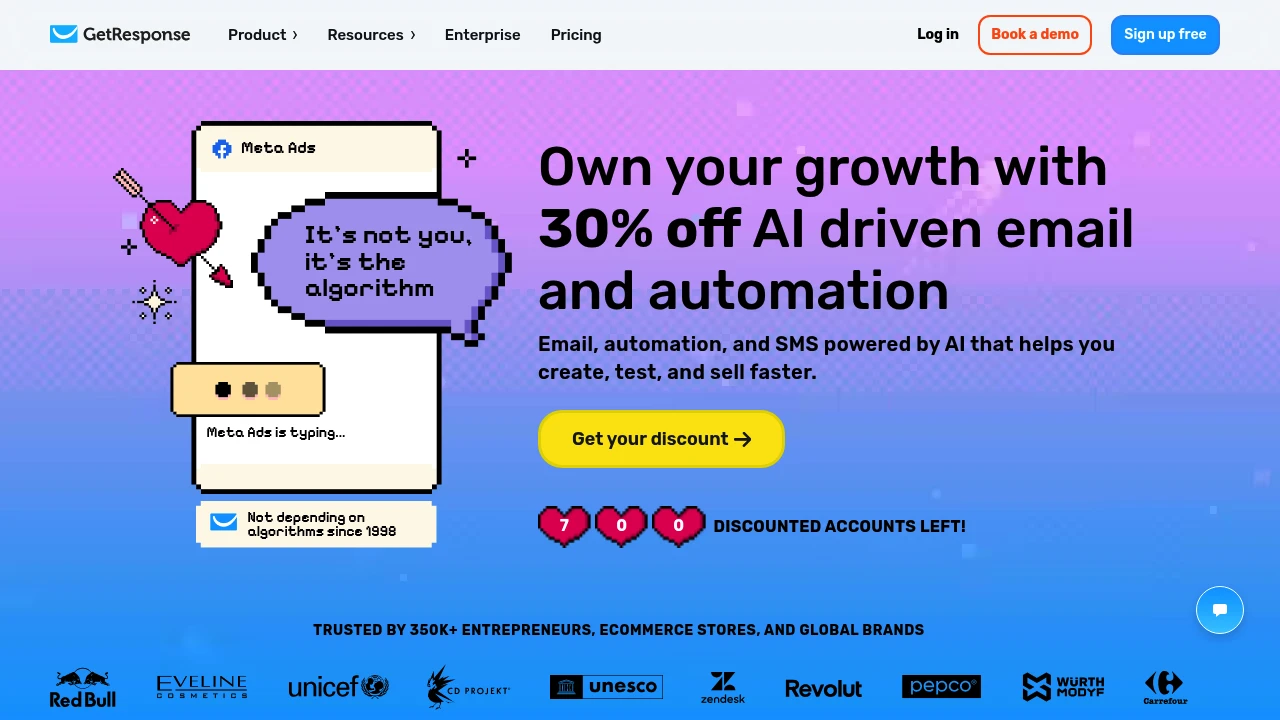
GetResponse offers email marketing, automation, landing pages, and SMS with AI that writes content, recommends send times, and helps convert leads into revenue.
GetResponse: Email Marketing & Automation Platform
GetResponse is an integrated platform for email marketing, automation, landing pages, and SMS, helping businesses boost conversion with AI-powered tools. Built for ecommerce, entrepreneurs, and brands expanding their customer base.
What is GetResponse?
GetResponse is an all-in-one marketing platform offering unlimited email sends, automation workflows, and landing page creation. Built-in AI assists with subject lines, send-time optimization, and content recommendations, supporting over 150 integrations. The platform claims a 99% deliverability rate across 160+ countries and serves 350,000+ customers.
Core Capabilities
- AI email writing: Auto-generates subject lines, tailors content, and recommends optimal send times
- Unlimited automation: Build welcome sequences, cart recovery, and re-engagement journeys
- Landing page builder: AI writes copy, selects layouts, and speeds up launch
- SMS marketing: Reach customers directly via SMS, integrated in one platform
- AI product recommendations: Personalize website and email product suggestions
- Webinar hosting: Record, promote, and nurture leads through webinars
- Forms and popups: Create banners and popups to engage visitors
- 150+ integrations: Connect CRM, ecommerce, and other tools
Pros
- Unlimited emails, automations, and landing pages at affordable pricing as you scale
- AI features cover content writing, send-time optimization, and product recommendations
- 99% email deliverability across 160+ countries
- 24/7 customer support with five-star ratings
- 14-day free trial, no credit card required
Cons
- Advanced features (webinars, sales funnels) require higher-tier plans
- AI writing quality depends on input data and may need manual tweaks
- Feature-rich interface can overwhelm new users
- Some integrations need extra setup or third-party tools
Decision Guidance
Use GetResponse if: You need integrated email, automation, landing pages, and SMS for a small to mid-sized business or ecommerce store; you want AI to speed up content creation and optimize send times; you're looking for unlimited sends with pricing that stays reasonable as you grow.
Consider alternatives if: You only need basic email for a small team and prefer simpler tools; you require deep CRM integration or complex sales processes better served by specialized platforms; you have a very tight budget and want to start with free or lower-cost entry-level tools.
Looking for alternatives to other popular services? Check out other posts in the alternatives series and GTM Guide, a directory of tools with filters for tags and alternatives for easy browsing and discovery.

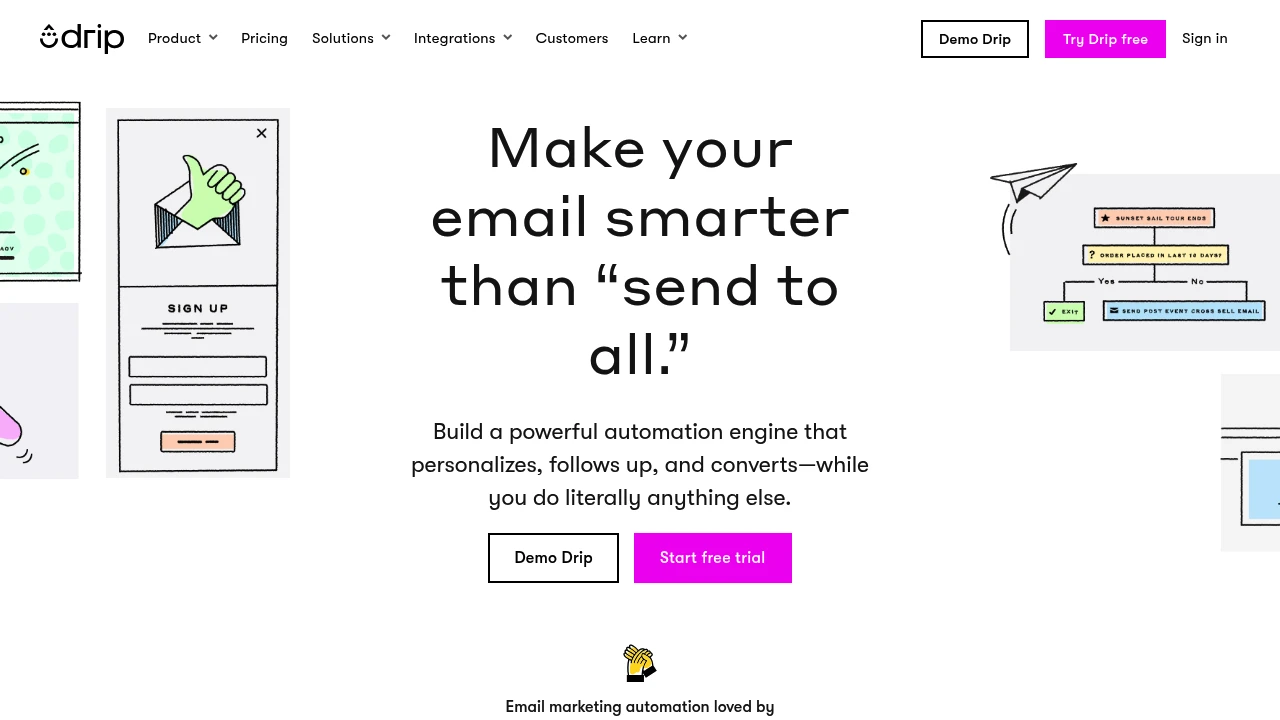
Drip is an email marketing automation platform for B2C brands, offering smart segmentation, pre-built workflows, and a visual builder to personalize campaigns and boost conversions.
Summary
Drip is an email marketing automation platform built for B2C brands, converting prospects into loyal customers through behavior-based segmentation and workflow automation. Ideal for e-commerce, creators, and online service providers.
What is Drip?
Drip is a powerful yet easy-to-use marketing automation tool designed for B2C businesses selling physical or digital products. The platform integrates with Shopify, WooCommerce, and other e-commerce systems, using smart segmentation and pre-built workflows to send personalized messages at the right time to the right audience. No developers needed—launch automated marketing strategies quickly.
Core Capabilities
- Visual email builder: Drag-and-drop design, create beautiful emails without coding
- Pre-built workflow templates: Cover cart abandonment, new customer onboarding, event reminders, and more
- Dynamic behavior segmentation: Auto-update audience groups based on purchase history and engagement
- 50+ integrations: Supports Shopify, WooCommerce, Klaviyo, Zapier, and other popular tools
- Personalized content: Embed customer data directly into emails to boost conversions
- Free migration service: Lists over 17,500 subscribers get one-on-one migration and 90-day onboarding support
Pros
- Customers using segments earn 5x more revenue than those who don't
- Workflow emails achieve 99.9% average open rate with strong click-through performance
- 97.3% customer satisfaction score, live chat response under 2 minutes
- Pre-built templates let non-marketers launch campaigns quickly
- GDPR and CAN-SPAM compliant with deliverability expert support
Cons
- Pricing based on active contacts and email volume, costs may grow with scale
- Primarily focused on B2C, limited B2B features
- Live chat support only for $99/mo+ plans during business hours
- Learning curve exists, advanced automation takes time to master
- Some users report interface simplicity requires initial adjustment
Decision Guidance
When to use: You run an e-commerce store, online course, or subscription service and need automated cart recovery, customer segmentation, and personalized email marketing with a platform that's powerful yet approachable. Perfect for growing brands that have outgrown basic tools like Mailchimp but need affordable pricing.
Consider alternatives: If you're a B2B company or need complex lead scoring systems, you may need more B2B-focused tools. If your budget is extremely tight or you only need basic broadcast emails, simpler tools may suffice.

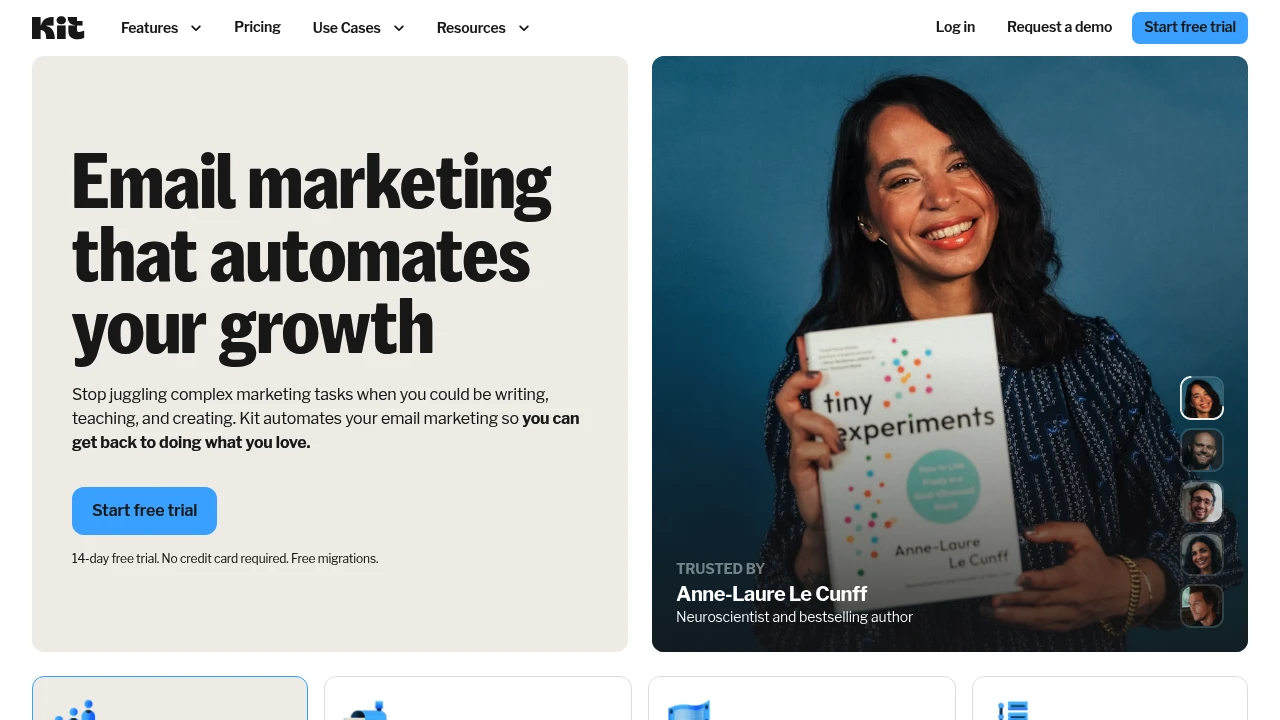
Kit is a creator marketing platform offering email marketing, automation, landing pages, and sales tools to help you grow your audience and monetize, ideal for content creators and small businesses.
Kit
Kit is a marketing platform built for creators, integrating email marketing, automation, and sales tools to help you build and monetize your audience.
What is Kit?
Kit (formerly ConvertKit) is a creator marketing platform focused on email marketing and audience management. It provides tools for bloggers, YouTubers, podcasters, and small businesses to grow subscribers and promote products through automated workflows, landing pages, and forms.
Core Capabilities
- Email marketing: Create and send email broadcasts, manage subscriber lists
- Automation workflows: Set up triggered email sequences and tagging rules
- Landing pages & forms: Build subscription pages without coding
- Sales tools: Sell digital products and manage memberships
- Subscriber management: Organize audiences with tags and segments
Pros
- Clean interface designed for non-technical creators
- Powerful automation and tagging system
- Free plan supports up to 10,000 subscribers
- Integrated landing page and form builder
- Built-in digital product sales features
Cons
- Pricing scales quickly with subscriber count
- Limited email template design options
- Basic analytics compared to advanced platforms
- Learning curve can be steep for beginners
- Fewer integrations than larger marketing platforms
Decision Guidance
Use Kit when: You're a content creator, blogger, or small business needing straightforward email marketing and automation tools to build an audience and sell digital products.
Consider alternatives when: You need advanced design templates, complex CRM features, or extensive third-party integrations, or your subscriber list exceeds 10,000 and budget is tight.

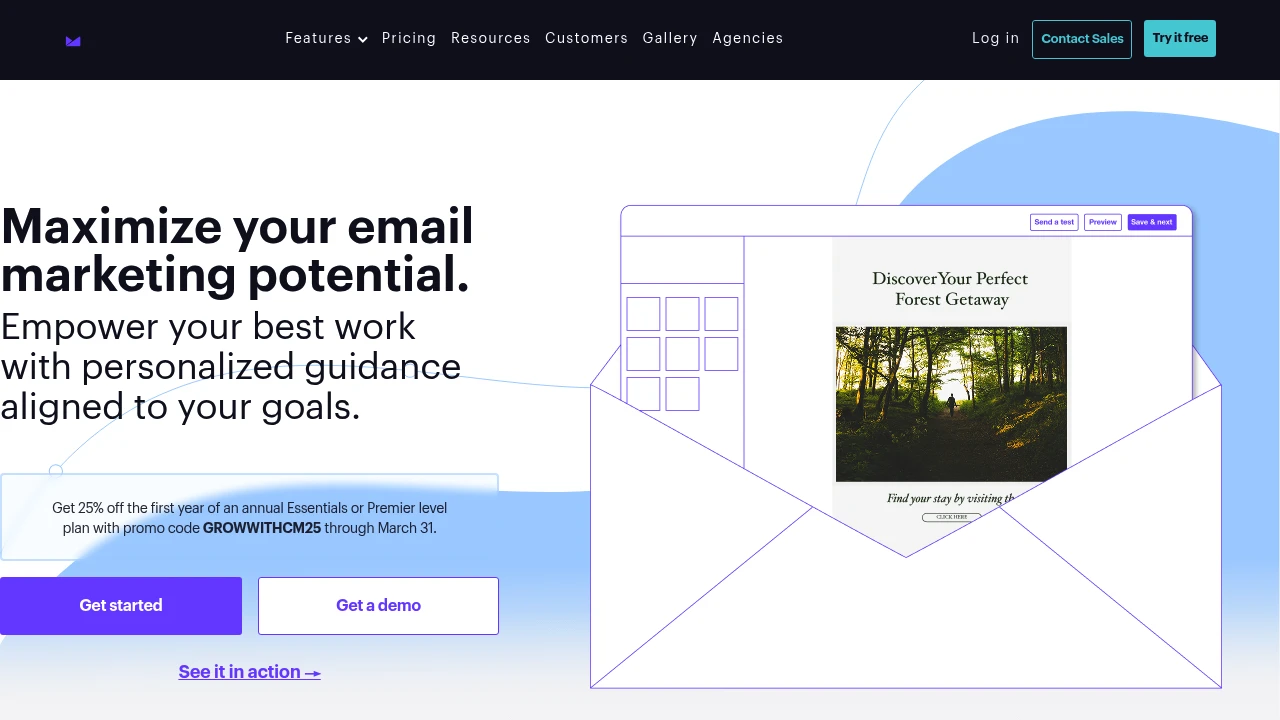
Campaign Monitor offers drag-and-drop email builder, visual journey designer, and AI optimization tools to automate customer journeys and boost email marketing performance for businesses of all sizes.
Summary
Campaign Monitor is an email marketing platform that provides automated customer journeys, drag-and-drop design tools, and real-time analytics to help businesses build loyal customer bases.
What is Campaign Monitor?
Campaign Monitor is a comprehensive email marketing platform that enables businesses to create, send, and track email campaigns using a visual journey designer, customizable templates, and AI-powered optimization tools. The platform offers a drag-and-drop editor, responsive templates, and real-time dashboards suitable for teams of all sizes.
Core Capabilities
- Visual journey designer: Automate email journeys for perfectly timed sends
- Drag-and-drop email builder: Customize templates and designs without coding
- AI-powered features: Segment Mapper and AI Email Booster enhance audience targeting and campaign optimization
- Website Builder: Drag-and-drop website creation integrated with email lists
- Real-time analytics dashboards: Track performance across email campaigns, automated journeys, and transactional emails
- Responsive templates: All templates automatically adapt to mobile devices
- Team template management: Lock template sections to maintain brand consistency
Pros
- Drag-and-drop editor is intuitive and requires no technical skills
- Visual journey designer makes automation workflows approachable
- Responsive templates ensure emails display well on all devices
- Real-time dashboards provide comprehensive campaign data analysis
- AI tools help optimize audience targeting and campaign performance
Cons
- Advanced features (AI Email Booster, Website Builder) require additional payment
- Pricing information not clearly displayed on website
- Annual plans may be costly for small businesses
- Feature-rich platform may require learning time for beginners
Decision Guidance
When to use: You need an easy-to-use email marketing platform with automated journeys, drag-and-drop design, and real-time analytics, ideal for small to mid-sized businesses and marketing teams.
When to consider alternatives: You need more transparent pricing structure, advanced CRM integrations, or have a limited budget and don't require AI-driven optimization tools.
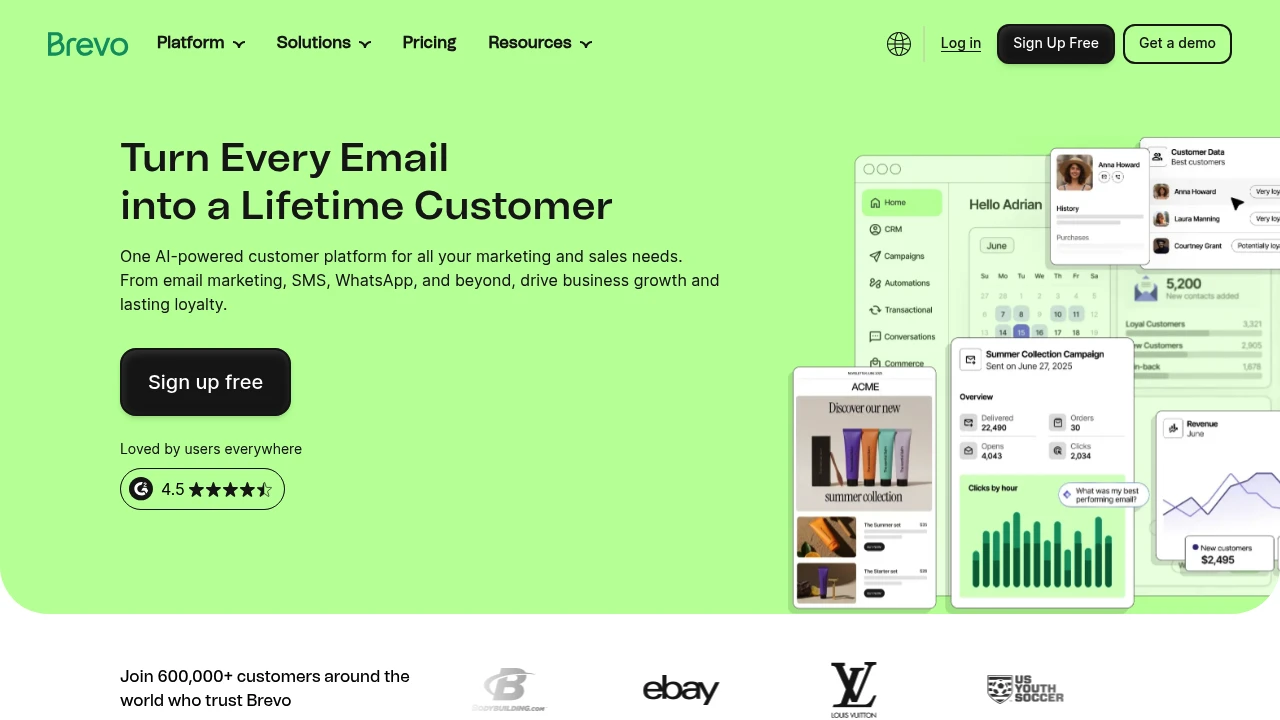
Brevo offers email marketing, SMS, WhatsApp, CRM, live chat, and transactional email with AI-powered automation. Trusted by 600K+ users. Free trial available.
Brevo: Email & SMS Marketing, CRM & Automation Platform
Brevo is a multichannel customer engagement platform combining email, SMS, WhatsApp, CRM, live chat, and transactional email. AI-driven automation tools boost conversions and loyalty. Trusted by over 600,000 users worldwide, from startups to enterprise.
What is Brevo?
Brevo is an all-in-one customer engagement platform that manages marketing, sales, and customer relationships in a single interface. It offers a drag-and-drop editor, ready-made templates, and no-code automation tools for non-technical users to launch campaigns quickly. Built-in Aura AI agents auto-generate copy, optimize send times, recommend products, and analyze data to eliminate busywork. Integrates with over 150 third-party tools including ecommerce, CMS, and CRM systems.
Core Capabilities
- Multichannel marketing: Email, SMS, WhatsApp, live chat, and push notifications
- AI agents (Aura): Auto-generate copy, segment audiences, optimize send times, and recommend products
- CRM & sales tools: Contact management, deal tracking, automated sales emails
- Marketing automation: No-code workflows, advanced segmentation, web tracking
- Transactional email: Order confirmations, password resets, and system emails
- Live chat & conversation summaries: AI-powered chat summaries and tone adjustments
- Data analytics: Natural language queries and visual reports
Pros
- Drag-and-drop editor and templates make it easy for non-technical users
- AI agents automate copywriting, segmentation, and send-time optimization
- Combines email, SMS, WhatsApp, CRM, and live chat in one platform
- Integrates with 150+ third-party tools
- Free plan available with no credit card required
Cons
- Advanced features (AI agents, WhatsApp) require paid plans
- Some users report a steeper learning curve than expected
- Free plan has daily sending limits
- Certain integrations require additional setup
Decision Guidance
Choose Brevo if you need multichannel marketing tools for SMBs or ecommerce, want to manage email, SMS, CRM, and automation in one platform, and use AI to reduce manual work. Ideal for budget-conscious teams that need scalability.
Consider alternatives if you only need a single channel (e.g., email-only) or already have a dedicated CRM system—specialized tools may fit better. Large enterprises requiring deep customization or on-premise deployment may need enterprise-grade solutions.


