Drift Alternatives
Discover the best alternatives to Drift. Compare features, pricing, and find the perfect replacement.
The best alternative to Drift is Koala. If that doesn't suit you, we've compiled a ranked list of other Drift alternatives to help you find a suitable replacement. Other interesting alternatives to Drift are: Warmly, Tidio, Salesloft and Qualified.
Drift alternatives are mainly AI Sales Chatbots, but may also be AI Visitor Identification or AI Intent Signals. Browse these if you want a narrower list of alternatives.

Written by Eric Leung
Last updated: June 10, 2026 at 8:00 AM
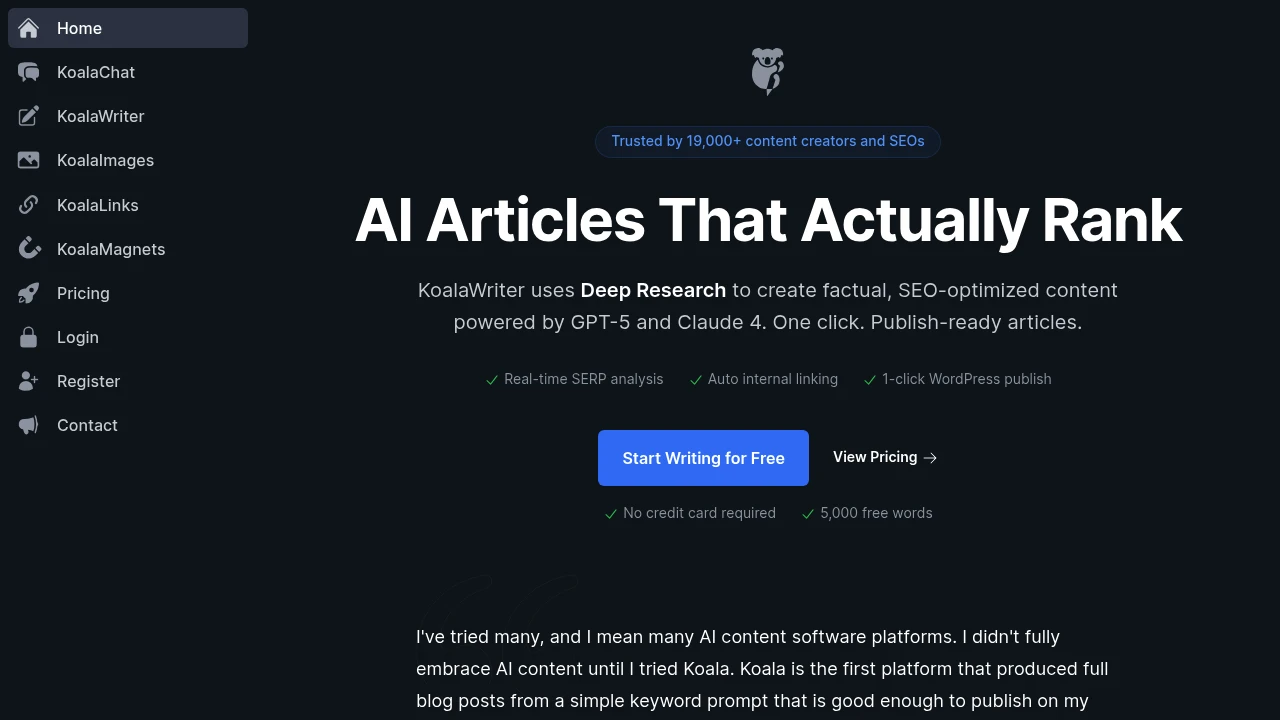
Koala AI offers KoalaWriter and KoalaChat, using GPT-5 and Claude 4 with deep research to create publish-ready SEO articles. Auto internal linking and 1-click WordPress publish.
Summary
Koala AI is an AI writing platform built for SEO content creators, using deep research to generate factual, SEO-optimized long-form articles that solve content scaling and ranking challenges.
What is Koala AI?
Koala AI provides KoalaWriter and KoalaChat. KoalaWriter uses GPT-5 and Claude 4 models with real-time SERP analysis to generate structured, publish-ready long-form articles from a single keyword prompt. The system auto-handles heading tags, internal linking, and supports one-click publishing to WordPress.
Core Capabilities
- Deep Research: Ingests reliable sources to create factual content
- Real-time SERP analysis: Optimizes structure and topical coverage based on search results
- Auto internal linking: Intelligently builds site links to boost SEO
- 1-click WordPress publish: Publish directly to your site without manual copy-paste
- Multiple article types: Supports product roundups, local places, informational content
Pros
- One-click publish-ready articles save significant editing time
- Content depth and structure outperform most AI writing tools
- Real-time SERP analysis ensures topical relevance and ranking potential
- Starts at $9/month with 5,000 free trial words
- Continuous feature updates with responsive developer support
Cons
- Still requires professional editing to ensure expert-level accuracy
- Output quality depends on LLM training data limitations
- Primarily optimized for English content; other language support unclear
- Requires SEO knowledge to fully leverage tool capabilities
Decision Guidance
Use when: You need to scale SEO content production as a publisher, niche site operator, or content marketing team—especially if you have an editorial process to quickly review AI drafts.
Consider alternatives: If you need highly specialized or technical content, strict brand voice requirements, or primarily create non-English content, pair with human writers or choose specialized writing services.

Looking for alternatives to other popular services? Check out other posts in the alternatives series and GTM Guide, a directory of tools with filters for tags and alternatives for easy browsing and discovery.

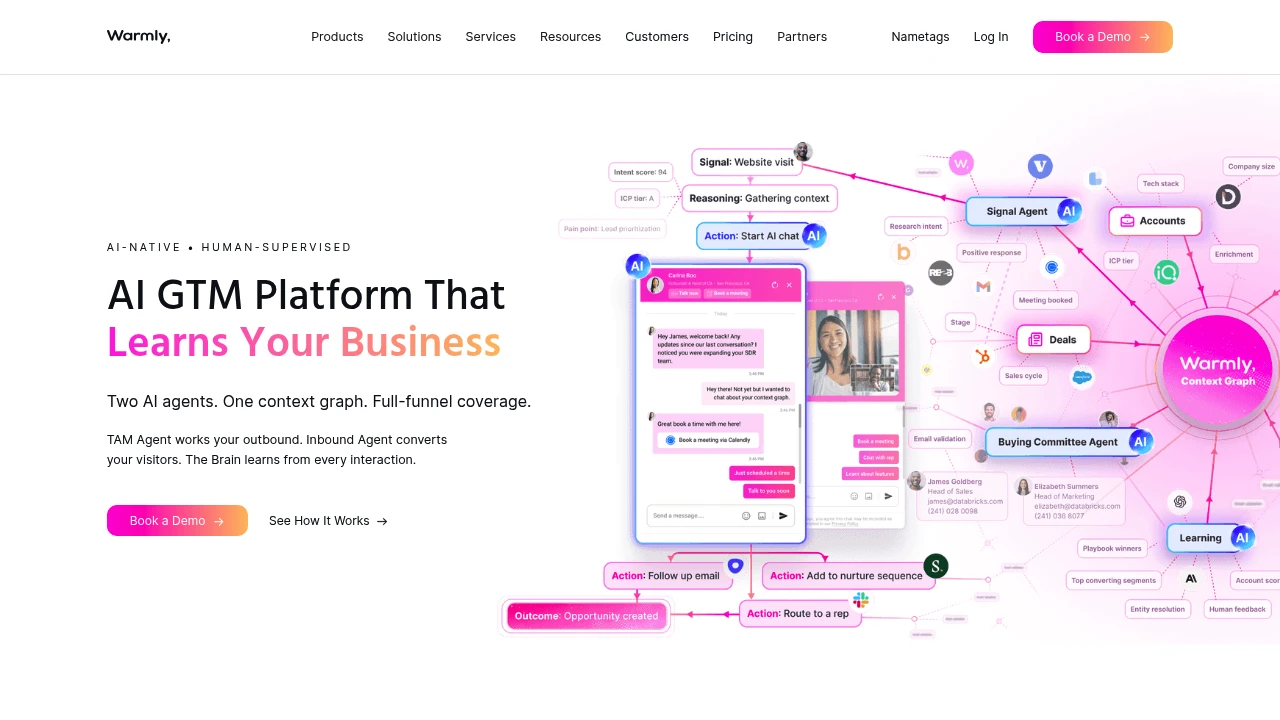
Warmly AI offers dual AI agents that auto-identify website visitors, track person-level intent signals, execute outbound and inbound conversion, helping GTM teams build real pipeline.
Warmly AI - Person-Level Intent Platform
Warmly AI is an AI-native GTM execution platform that automates outbound and inbound conversion through dual AI agents and a context graph, helping sales and marketing teams identify visitors, track real-time intent signals, and engage automatically.
What is Warmly AI?
Warmly AI is a full-funnel AI GTM platform combining TAM Agent (outbound) and Inbound Agent (visitor conversion) as two autonomous agents. The core is The Brain, a context graph that learns from every interaction, auto-scores accounts, maps buying committees, tracks cross-channel signals (1st-party web behavior, 2nd-party social activity, 3rd-party keyword research), and executes coordinated email, ads, chat, and personalized microsites. Ideal for GTM teams looking to cut CAC, accelerate first meetings, and build pipeline from website visitors.
Core Capabilities
- Dual AI agents: TAM Agent handles outbound (account scoring, buying committee mapping, coordinated email & ads); Inbound Agent converts visitors (person-level ID, AI chat, smart popups, personalized microsites)
- The Brain context graph: Learns from all interactions, provides full account history and intent context
- Real-time person-level intent signals: Integrates 1st-party (web behavior, product usage, CRM), 2nd-party (social activity, job changes), 3rd-party (keywords, competitor research) data
- Omnichannel execution: Automates email, ad retargeting, AI chat, LinkedIn outreach
- Visitor de-anonymization: Identifies personal identity and company info of website visitors
Pros
- Full-funnel coverage: Single platform integrates outbound and inbound, replaces multiple point solutions
- Real-time conversion: Auto-identifies high-intent visitors and engages instantly, accelerates meeting booking
- Contextual intelligence: The Brain provides full account history, avoids duplicate or irrelevant outreach
- Cost-effective: Users report saving tens of thousands annually (vs. Drift etc.), CAC cut ~50%
- Fast results: Case studies show 5 meetings booked within weeks of onboarding
Cons
- Depends on web traffic: Inbound Agent effectiveness tied to existing visitor volume; low-traffic sites see limited benefit
- Learning curve: Dual agents and context graph require initial setup and data integration
- Pricing transparency low: No public pricing on website; requires sales contact
- 3rd-party data limits: Intent signal accuracy depends on external data source quality
- Emerging platform: Compared to mature tools, feature iteration and integration ecosystem still developing
Decision Guidance
Use Warmly AI if: Your GTM team wants to build pipeline from website visitors, needs automated outbound and inbound conversion, and wants to replace multiple tools (like Drift, Clearbit, Outreach) with one platform to cut costs. Especially suited for B2B SaaS or high-growth companies with steady web traffic who value real-time engagement and intent signals.
Consider alternatives if: Your website traffic is extremely low or you rely mainly on offline channels; you need highly customized workflows and your existing tool stack is deeply integrated; you prefer transparent pricing and mature ecosystems (like HubSpot, Salesforce).

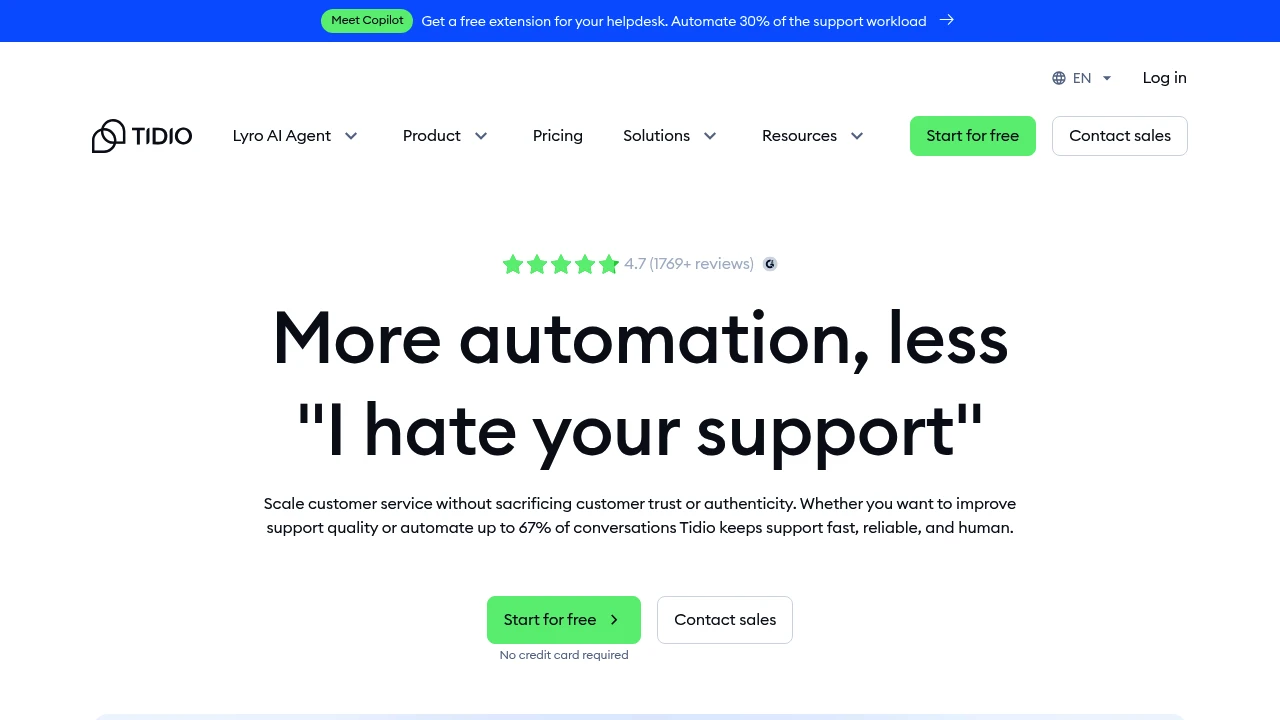
Tidio combines AI agent, live chat, and helpdesk to automate up to 67% of conversations while keeping the human touch. Trusted by 300k+ businesses worldwide.
Summary
Tidio is a customer service platform that integrates Lyro AI agent, live chat, and helpdesk tools to automate up to 67% of conversations while maintaining human support quality, trusted by over 300,000 businesses globally.
What is Tidio?
Tidio is customer support software built for SMBs, uniting the trustworthy Lyro AI agent, live chat, and helpdesk in one platform. Lyro trains on verified data sources to deliver reliable, brand-aligned responses and handle complex queries; human agents focus on priority customers and technical tasks. The platform offers proactive automation, workflow management, and 120+ integrations, letting businesses scale support without losing authenticity.
Core Capabilities
- Lyro AI agent: Trained on verified data, understands context and aligns with brand voice
- Live chat & helpdesk: Unified interface for customer conversations with smart AI features
- Proactive automation (Flows & Smart Actions): Capture leads and book calls even offline
- Workflow automation: Auto-assign tasks and reduce repetitive work
- Native integrations: Shopify, WordPress, Messenger, Instagram, and 120+ tools
- CSAT tracking & suggestions: Real-time Lyro performance monitoring with actionable tips
Pros
- Industry-leading 67% resolution rate with money-back guarantee if under 50%
- Human-like conversations that understand context and match brand tone
- No technical skills required for deployment and quick integration
- Human-AI collaboration design automates busywork so teams focus on high-value tasks
- Data security and privacy meeting enterprise standards
Cons
- Advanced customization may require professional services team
- Primarily targets SMBs; very large enterprises may need more tailored solutions
- Initial AI training requires time to prepare verified data sources
- Some advanced integrations available only on paid plans
- Interface language options may not cover all regions
Decision Guidance
Use Tidio if: You're an SMB that needs to scale support while keeping the human touch; you want to automate repetitive queries without risking customer trust; you value resolution rates and need a reliable AI agent; you need live chat, helpdesk, and AI unified in one platform.
Consider alternatives if: You're a large enterprise needing highly customized solutions; you already have a full support stack and only need a standalone AI plugin; you have a very tight budget and need only basic chat; you require industry-specific features (e.g., healthcare or finance compliance).

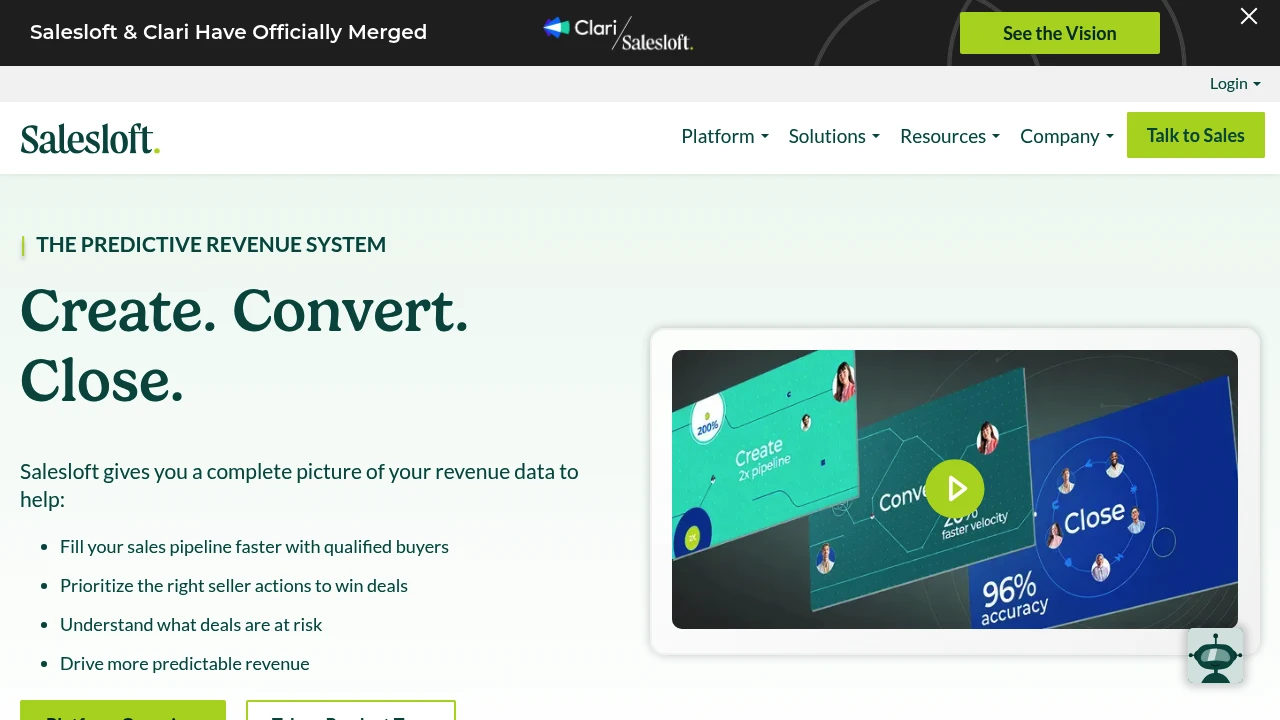
Salesloft unifies AI chat agents, sales engagement, revenue intelligence, conversation analysis, deal management, and forecasting to fill pipeline, accelerate deal cycles, and improve forecast accuracy.
Summary
Salesloft is an AI revenue orchestration platform that unifies sales engagement, revenue intelligence, conversation analysis, deal management, and forecasting tools to help sales teams prioritize high-value actions, accelerate deal cycles, and improve pipeline quality.
What is Salesloft?
Salesloft integrates AI chat agents (Drift), sales engagement (Cadence), revenue intelligence (Analytics), conversation intelligence (Conversations), deal management (Deals), and forecasting (Forecast) into one platform. Through Rhythm, the system turns buyer signals into seller action recommendations, while AI agents automate tedious tasks and surface critical insights. The platform connects with CRM, conferencing, dialer, and email systems to provide revenue teams with a unified data view.
Core Capabilities
- AI chat agents (Drift): Engage website visitors in real-time to convert leads
- Cadence: Automate pipeline generation, lead nurture, and renewal workflows
- Analytics: Centralize reporting across buyer and customer lifecycle data
- Conversations: Analyze sales calls to identify coaching opportunities and best practices
- Deals: AI insights show deal status, risk, and actions needed to accelerate close
- Forecast: Combine real-time deal data and AI to improve forecast accuracy
- Rhythm: Turn buyer signals into prioritized action recommendations
- Integration ecosystem: Connect CRM, conferencing, dialer, email, and calendar tools
Pros
- Unifies multiple revenue tools in one platform, reducing context switching
- AI agents automate prioritization and tedious tasks
- Delivers productivity and pipeline results within 10 days
- Trusted by 5000+ enterprise customers with proven 2.5x faster deal cycles
- Unifies first-party signals, third-party intent data, and sales activity
Cons
- Broad feature set creates a steep learning curve initially
- Pricing not publicly available; requires sales contact
- Primarily designed for enterprise sales teams; may be overkill for small teams
- Requires CRM and tool integrations to unlock full value
Decision Guidance
When to use: Enterprise sales teams needing unified revenue data, automated pipeline generation, improved forecast accuracy, and faster deal cycles will benefit from Salesloft's complete solution. Especially suited for organizations requiring integrated AI chat, sales engagement, conversation analysis, and deal management.
Consider alternatives: Small teams or budget-constrained organizations may find the feature set too complex; if you only need a single capability (like pure conversation intelligence or CRM), specialized tools may be more cost-effective.

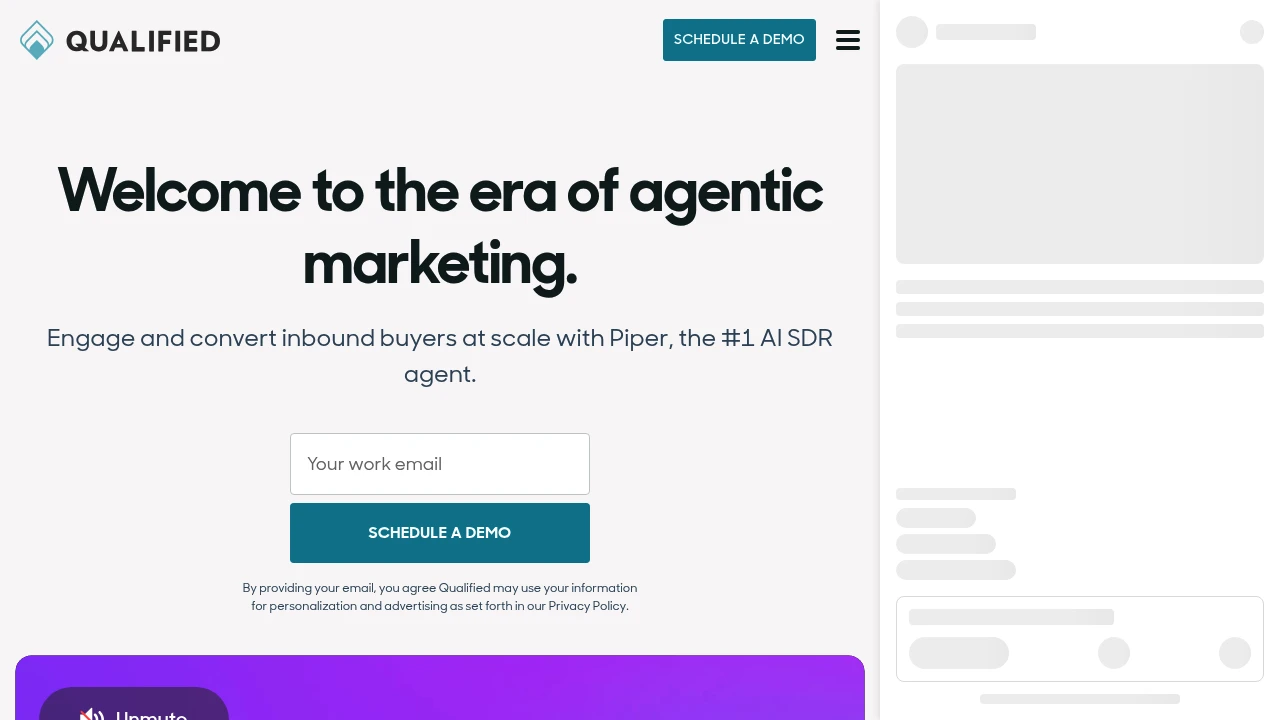
Piper is the #1 AI SDR agent that engages website visitors, sends personalized email follow-ups, and books meetings 24x7 to scale your inbound pipeline. Trusted by 500+ companies to boost conversion.
Summary
Piper is an AI SDR agent (AI Sales Development Representative Agent) built for B2B marketing teams. It converts inbound leads 24x7 through live website conversations, email follow-up, and meeting booking, solving pipeline leakage caused by limited SDR bandwidth and fragmented systems.
What is Piper?
Piper is an AI SDR superagent from Qualified that works seamlessly across website and email channels. She proactively engages visitors via text, voice, and video, sends personalized nurture based on buyer journey, and autonomously books qualified meetings. Her mission is continuous pipeline generation for marketing teams. Over 500 companies have hired her.
Core Capabilities
- Multi-channel engagement: Real-time text, voice, and video conversations on your website
- Intelligent email nurture: Automated, personalized emails triggered by buyer behavior
- Autonomous meeting booking: Identifies high-value prospects and schedules meetings directly
- Cross-channel handoff: Smooth context transfer between website and email interactions
- 24x7 coverage: Works around the clock, unbound by time zones or headcount
Pros
- Proven results: Asana saw 22% pipeline lift, Greenhouse generated $27M pipeline, Crunchbase tripled meetings
- Rated 4.9 stars on G2 with 1,200+ reviews, ranked #1 AI SDR agent
- Seamless website-to-email workflow reduces lead drop-off
- Scales inbound conversion without adding SDR headcount
- Integrates with Salesforce and other CRM systems
Cons
- Focused on B2B inbound marketing; not suited for outbound or cold-calling teams
- Requires existing website traffic and marketing channels to deliver value
- Pricing not publicly disclosed, potentially a barrier for smaller businesses
- Conversation quality depends on AI; complex products may need human escalation
- Learning curve exists; requires configuration and training to match brand voice
Decision Guidance
When to use: If your B2B team has steady website traffic but limited SDR capacity, or you want to convert inbound leads and book meetings 24x7, Piper can significantly boost pipeline output and conversion efficiency.
When to consider alternatives: If you rely primarily on outbound sales, cold calling, or lack consistent inbound traffic, traditional CRM automation or human SDR teams may be more appropriate. If budget is tight or your product requires deep consultative selling, evaluate ROI carefully before committing.
Looking for alternatives to other popular services? Check out other posts in the alternatives series and GTM Guide, a directory of tools with filters for tags and alternatives for easy browsing and discovery.

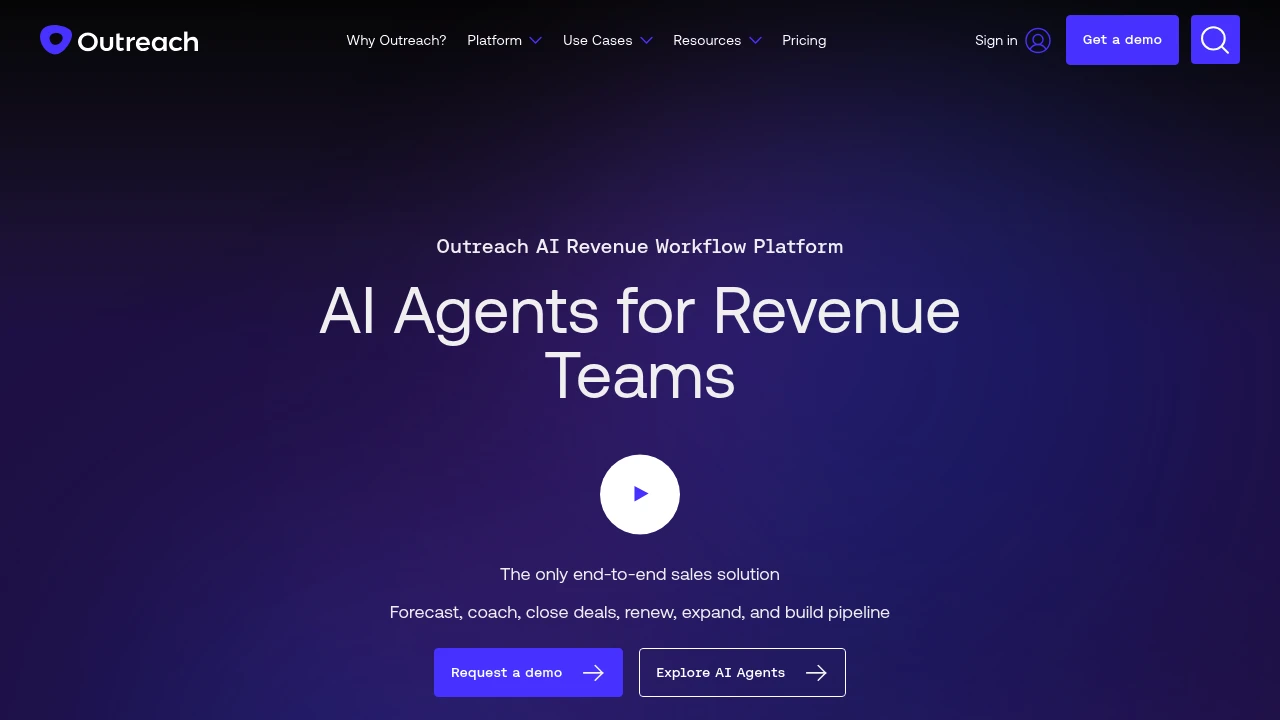
Outreach is an AI revenue workflow platform helping sales, marketing, RevOps, and customer success teams increase win rates through automated workflows, forecasting, and deal management.
Summary
Outreach is an end-to-end AI revenue workflow platform built for sales, marketing, RevOps, and customer success teams. The platform uses AI agents to automate prospecting, deal management, forecasting, and retention, helping teams boost productivity and accelerate deal velocity.
What is Outreach?
Outreach is an integrated sales execution platform that covers the full workflow from prospecting to customer expansion. The platform leverages AI agents to automate research, recommend next actions, identify buying committee members, and deliver real-time conversation insights. Sales leaders can forecast accurately with AI-assisted modeling that reduces prep time and improves revenue predictability.
Core Capabilities
- AI-driven prospecting: Automates research and surfaces best-fit prospects
- Deal management and risk detection: Rapidly inspect pipeline deals, uncover risks, and prioritize actions
- AI-assisted forecasting: Validates calls, compares outcomes, and improves accuracy
- Real-time conversation insights: Spots coaching opportunities and delivers consistent feedback
- Customer retention and expansion: Automates retention plays and flags renewal risks early
- Account orchestration: Identifies and engages all stakeholders to improve win rates
Pros
- Increases seller productivity by 60% with AI-driven workflows
- Consolidates tech stack: Amplitude saved over $600K annually by replacing five platforms
- Accelerates rep onboarding with centralized tools that are easier than standalone CRMs
- Improves forecast accuracy with AI-assisted modeling that reduces prep time
- Delivers real-time coaching feedback to improve team-wide performance
Cons
- Primarily targets enterprise sales teams; may be overkill for small teams
- Requires CRM integration (e.g., Salesforce) to unlock full value
- Steeper learning curve due to comprehensive feature set
- Pricing not publicly available; requires sales contact
- May be overly complex for simple sales processes
Decision Guidance
Use Outreach when: Enterprise sales, marketing, and RevOps teams need end-to-end workflow automation, accurate forecasting, and multi-platform consolidation. Especially suited for teams managing complex buying committees and high deal volumes.
Consider alternatives when: You run a small sales team with simple processes, have budget constraints, need only basic outreach features, or already use specialized tools for specific sales stages.

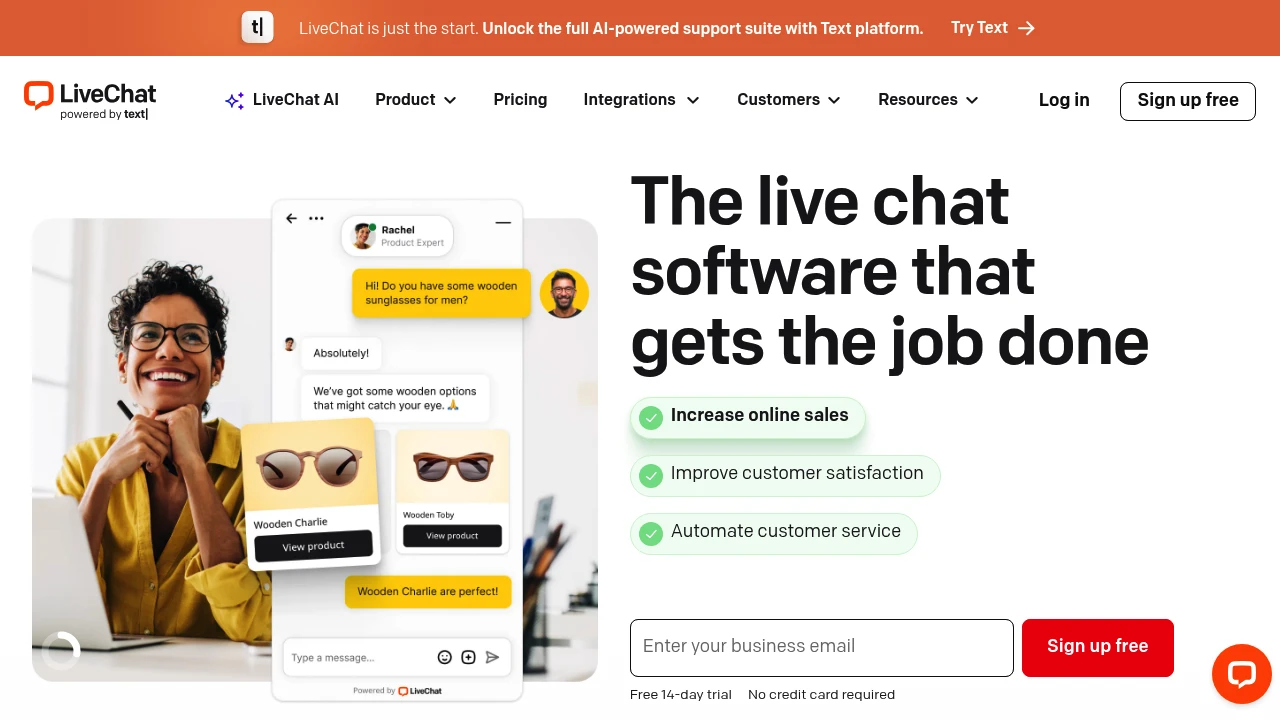
LiveChat® is AI live chat software for ecommerce and B2B. Proactive sales, automated support, Copilot assistant, 200+ integrations, real-time reports. Boost conversions and satisfaction.
Summary
LiveChat® is an AI-powered live chat software built for ecommerce and B2B businesses to increase website sales, automate customer service, and improve satisfaction.
What is LiveChat®?
LiveChat® is intuitive customer service software that lets your team engage website visitors through real-time chat. It integrates AI chatbots, Copilot assistant, and 200+ tools (WordPress, Shopify, Mailchimp) to centralize multi-channel messages, provide instant customer data, and deliver sales tracking reports. Ideal for businesses that need fast deployment and ease of use.
Core Capabilities
- Live chat: Pre-set messages start conversations, recommend products, and guide purchases
- AI chatbots: Automate common questions and repetitive tasks
- Copilot assistant: Real-time insights, text enhancement, tag suggestions, and chat summaries for agents
- Multi-channel integration: Centralize messages from website, Instagram, and other platforms
- Real-time reports: Sales tracker, agent performance, conversion, satisfaction, and traffic prediction
- 200+ integrations: Connect Shopify, WordPress, Squarespace, Mailchimp, and more
- Product cards: Share product details and order info directly in chat
Pros
- Quick setup, intuitive interface, team ready on day one
- AI Copilot helps agents respond faster and work more efficiently
- Customer reports show 25% increase in average order value, 30% boost in conversion
- 24/7/365 product expert support
- Mobile app lets you handle inquiries anywhere
Cons
- Some AI add-ons are pricey
- Advanced automation requires extra configuration
- Enterprise pricing requires sales contact
- Feature-rich but small teams may not use everything
Decision Guidance
Use LiveChat® if you run an ecommerce or B2B business that needs real-time support, proactive sales guidance, multi-channel messaging, and AI automation to reduce team workload.
Consider alternatives if you only need basic chat, have a tight budget, or don't require deep integrations and AI features—simpler free or low-cost options may suffice.

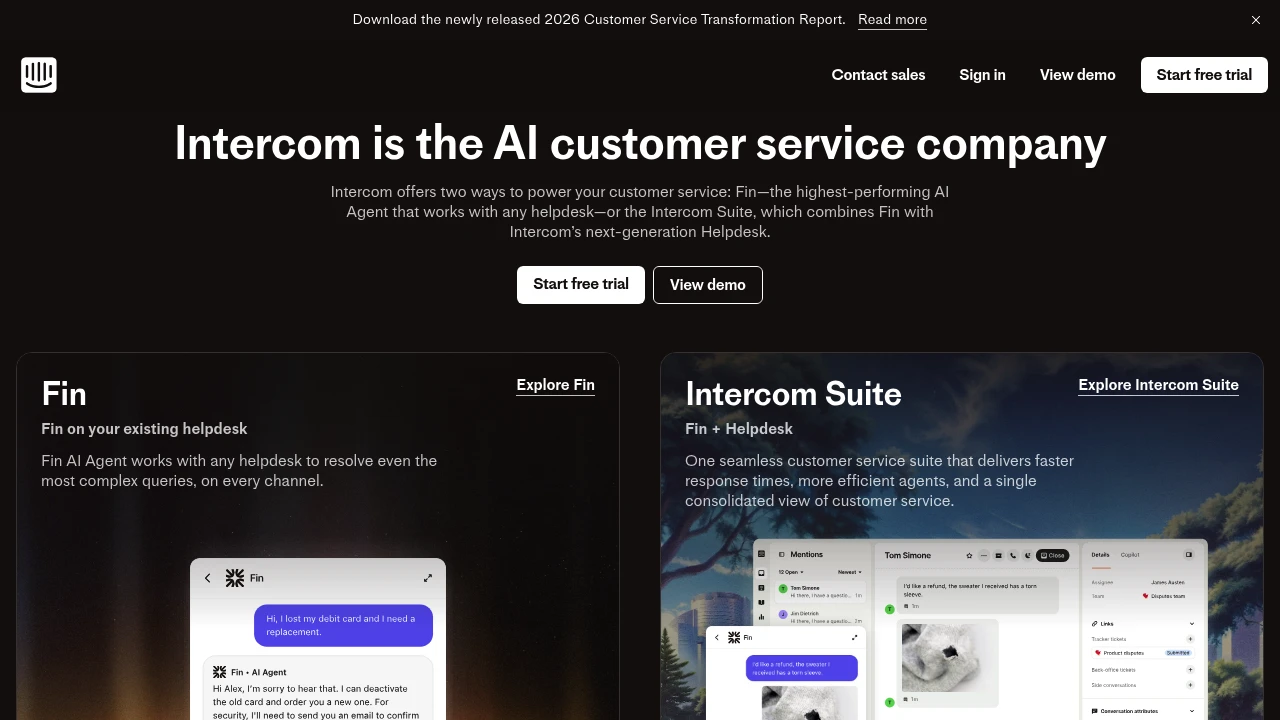
Intercom offers Fin AI Agent that integrates with any helpdesk to handle complex queries and deliver high-quality answers, or the full Intercom Suite combining Fin with next-gen helpdesk features.
Summary
Intercom is an AI customer service platform that automates query handling through Fin AI Agent, available as a standalone integration for existing helpdesks or as part of the full Intercom Suite.
What is Intercom?
Intercom offers two customer service solutions: Fin AI Agent integrates with any existing helpdesk to automate customer responses, or the Intercom Suite combines Fin with a next-generation helpdesk platform. Fin focuses on handling complex queries and delivering high-quality automated answers.
Core Capabilities
- Fin AI Agent: AI customer service agent that works with any helpdesk
- Automated responses: Handles complex customer queries with accurate answers
- Intercom Suite: Combines Fin with complete helpdesk system
- Flexible deployment: Use Fin standalone or adopt the full suite
Pros
- Integrates with existing helpdesk systems without platform replacement
- Strong capability to handle complex queries via AI agent
- Choice between standalone AI tool or complete customer service suite
- Focuses on high-quality automated response delivery
Cons
- Pricing information not publicly transparent
- AI response accuracy needs evaluation for industry-specific needs
- Full functionality may require adopting Intercom Suite
- Learning curve depends on chosen solution complexity
Decision Guidance
Use when: You have an existing helpdesk but need high-quality AI automation, or want a complete customer service platform with integrated AI.
Consider alternatives: If you need full control over AI training processes, or have limited budget and only require basic automated response features.

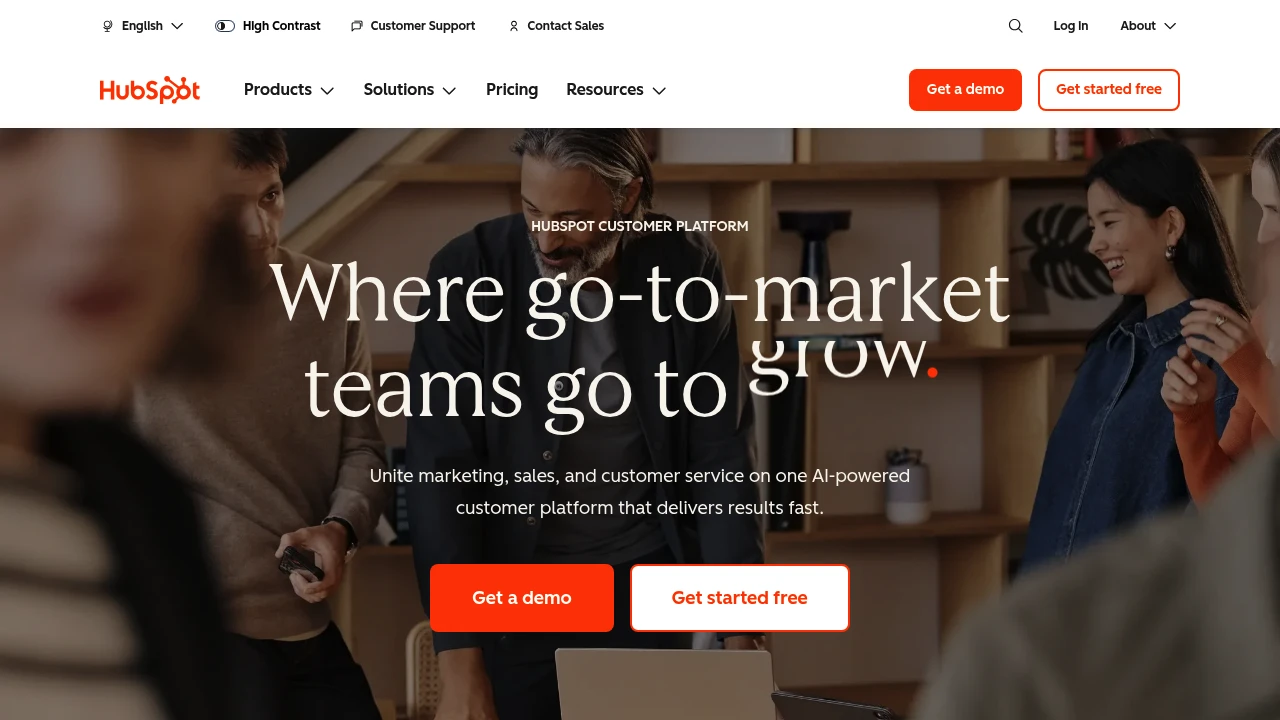
HubSpot integrates CRM, marketing, sales, and customer service on one AI-powered platform with Breeze agents that automate workflows, helping 278,000 businesses grow faster.
Summary
HubSpot is an AI-powered customer platform that unifies marketing, sales, customer service, and CRM to help businesses consolidate data, automate processes, and accelerate growth.
What is HubSpot?
HubSpot is a comprehensive customer platform that combines Marketing Hub, Sales Hub, Service Hub, Content Hub, Data Hub, Commerce Hub, and Smart CRM in a single system. The platform includes built-in Breeze AI tools and agents (Customer Agent, Prospecting Agent, Data Agent) that automate customer inquiries, sales outreach, and content creation. Over 278,000 businesses across 135 countries use HubSpot to manage customer relationships and drive business growth.
Core Capabilities
- Smart CRM: Unified customer data as the single source of truth for all business information
- Marketing Hub: Marketing automation, lead conversion, personalized content, and campaign tracking
- Sales Hub: Lead generation, pipeline management, automated outreach, and deal acceleration
- Service Hub: AI-powered customer support, ticketing, customer health scores, and usage analytics
- Content Hub: Content creation, multi-channel publishing, and brand consistency management
- Breeze AI Agents: 24/7 automation for customer inquiries (resolves 65%), sales research, and content generation
- Data Hub: Data integration, cleansing, and cross-team activation
- Commerce Hub: Quoting, payment collection, and subscription management
- 2,000+ Integrations: Connect existing tools and applications
Pros
- Unified platform: All marketing, sales, and service tools in one AI-powered system eliminate data silos
- Proven results: Customers gain 129% more leads, 36% more deals, and 37% better ticket closure rates within one year
- Built-in AI: Breeze agents automate 65% of customer inquiries, accelerate sales outreach, and generate content
- Flexible scaling: From Small Business Bundle to Enterprise plans, adapts to different team sizes
- Rich ecosystem: 2,000+ integrations, free tools, and active community support
Cons
- Learning curve: Multi-product platform requires time to master all features and best practices
- Cost accumulation: Advanced features and multiple Hub subscriptions can strain budgets for small businesses
- Customization limits: Some enterprise-level needs may require additional development or third-party integrations
- Data migration: Moving from other CRM systems requires planning and resource investment
- Feature overlap: Some functionality overlaps across different Hubs, requiring careful plan selection
Decision Guidance
Use HubSpot when: You need to unite marketing, sales, and customer service teams and want AI automation to boost efficiency and accelerate growth. Particularly suited for small to enterprise organizations seeking an integrated platform to replace scattered tools, valuing data unification and scalability.
Consider alternatives when: You only need single functionality (like pure CRM or email marketing) rather than a full platform, or have limited budget without need for advanced AI features. Businesses deeply invested in other ecosystems (like Salesforce) may face migration costs.

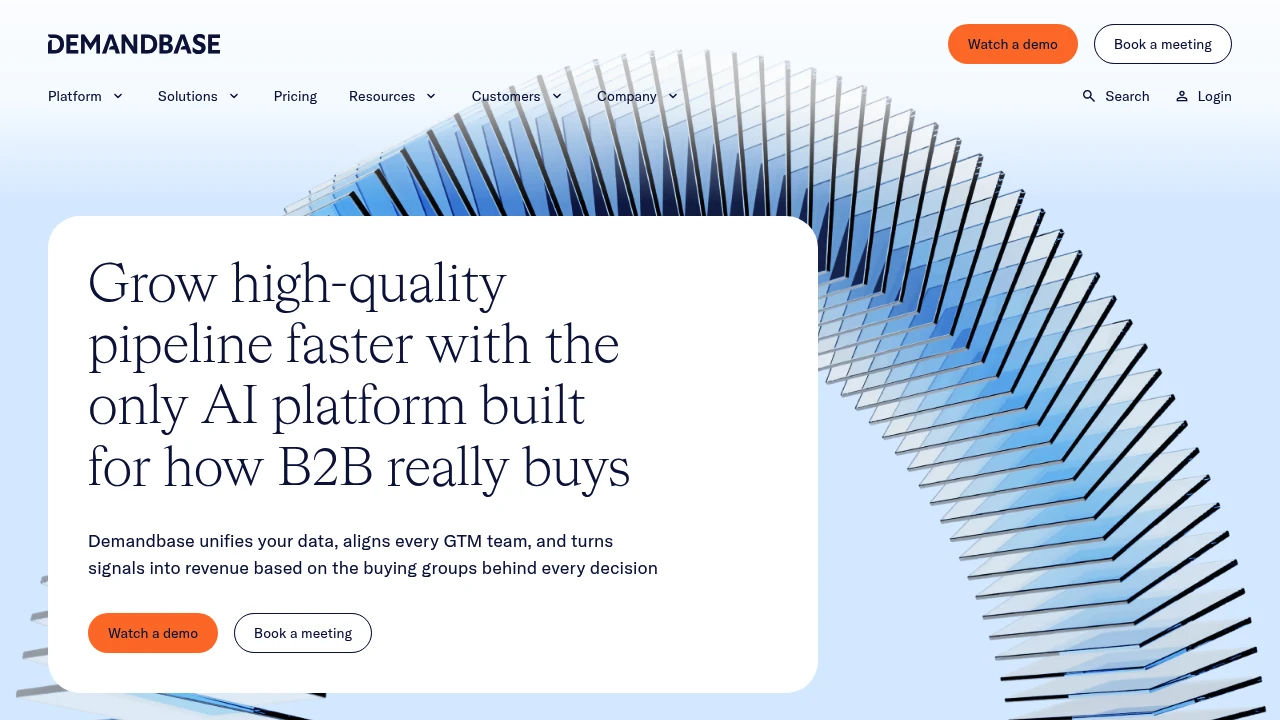
Demandbase is a B2B ABM platform that integrates first- and third-party data, uses AI to identify buying groups, and automates marketing and sales workflows to boost pipeline velocity.
Demandbase Review
Demandbase is an account-based marketing (ABM) platform for B2B enterprises, unifying data, AI insights, and automated execution to help sales and marketing teams identify buying groups and accelerate pipeline conversion.
What is Demandbase?
Demandbase merges first-party CRM and web activity with third-party intent data into a unified account view. Its AI agents (Agentbase) automate signal detection and orchestrate cross-channel actions. The platform offers account identification, web personalization, B2B ad targeting, sales tools, and analytics—focusing on buying groups rather than individual contacts, ideal for enterprise sales requiring multiple decision-makers.
Core Capabilities
- Buying group identification: Integrates account, contact, and buying group data to reveal full decision teams
- Intent data & signal integration: Combines first-party behavior and third-party intent signals for real-time purchase detection
- AI-driven automation: Pipeline AI triggers marketing and sales workflows automatically
- Native B2B ad platform (DSP): Intent-based, hyper-targeted ad delivery
- Web personalization & orchestration: Dynamically adjusts content and messaging by account stage
- Tech stack integrations: APIs and native connectors for CRM, marketing automation, and sales engagement platforms
Pros
- Unified data view: Consolidates multi-source data into a single account truth, reducing silos
- Transparent AI logic: Shows reasoning behind recommendations, not a black box
- Buying group focus: Targets decision teams, not individuals, improving enterprise close rates
- Native ad DSP: No external ad platform needed; intent data drives targeting directly
- Flexible integration: Open APIs and bi-directional data flow fit existing tech stacks
Cons
- Steep learning curve: Feature-rich platform takes time to master; may overwhelm smaller teams
- Pricing not public: Requires sales contact for quotes, lacks transparency
- Depends on data quality: Incomplete first-party data reduces AI accuracy
- Enterprise-focused: May exceed budget or needs for SMBs
- Integration needs tech resources: Complex setups may require dev team support
Decision Guidance
When to use: Enterprise B2B companies needing unified sales and marketing data, targeting multi-stakeholder decision processes, and deep integration with mature CRM and marketing automation systems. Customer cases show 3× conversion lift and 83% faster pipeline velocity.
Consider alternatives: Smaller teams with limited budgets, simple sales cycles, or basic lead management needs may prefer HubSpot, 6sense, or ZoomInfo. If you lack dedicated marketing ops staff, build data foundations first before adopting.
Looking for alternatives to other popular services? Check out other posts in the alternatives series and GTM Guide, a directory of tools with filters for tags and alternatives for easy browsing and discovery.

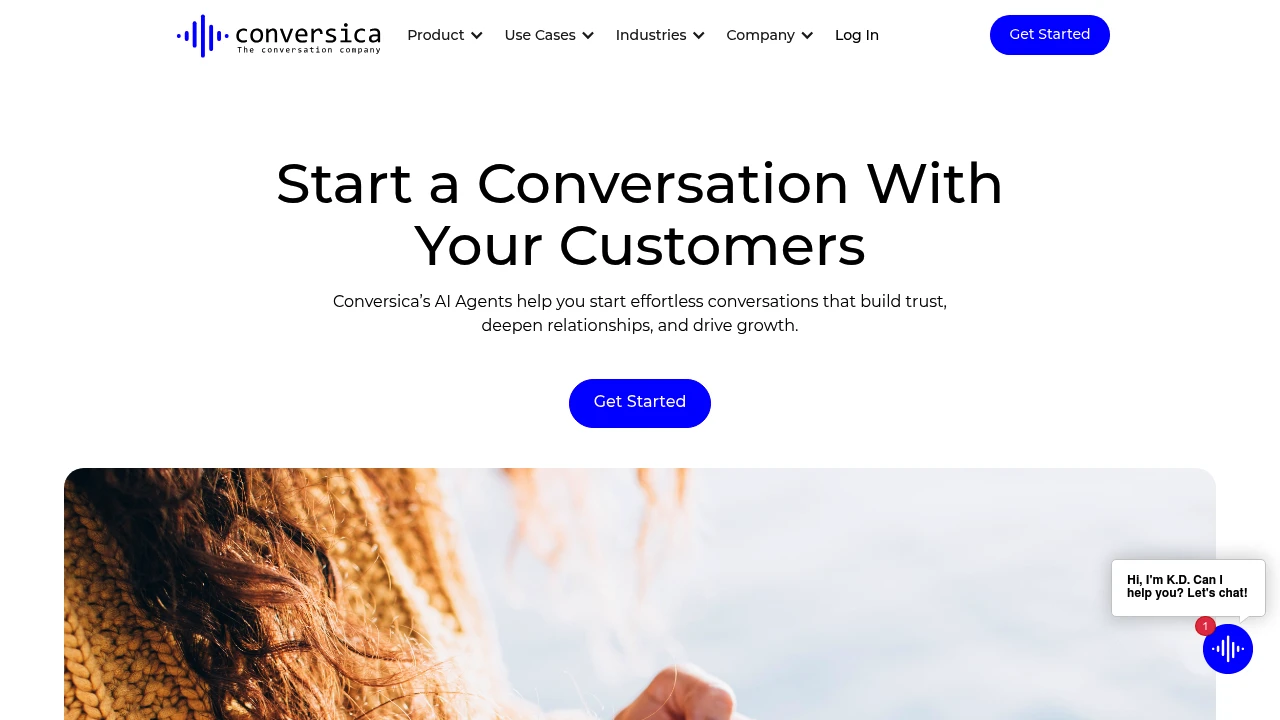
Conversica offers AI conversation agents that automate lead follow-up, customer service, and renewal conversations via email, SMS, and chat. Proven in 1.5 billion interactions, integrates with your CRM and marketing tools.
Summary
Conversica is an AI conversation agent platform that helps businesses acquire customers, improve service efficiency, and drive renewals through automated, personalized two-way conversations. Proven in over 1.5 billion conversations, it's built for sales, marketing, and customer success teams that need to automate customer interactions at scale.
What is Conversica?
Conversica provides AI-powered conversation agents that engage prospects and customers through persistent, contextual conversations via email, SMS, messaging apps, and chat. The platform is pre-trained for specific industries, integrates with your CRM and marketing automation tools, and automates tasks like qualification, follow-up, issue resolution, and meeting scheduling. AI agents operate 24/7, support multiple languages, and comply with enterprise-grade security standards (GDPR, SOC 2).
Core Capabilities
- Multi-channel conversation automation: Two-way interactions via email, SMS, chat, and messaging apps
- Lead qualification and follow-up: Automatically identify intent, schedule meetings, and advance the sales funnel
- Customer service and issue resolution: Answer common questions, update subscriptions, and handle billing inquiries in real time
- Customer retention and expansion: Trigger renewal conversations, recommend upgrades, and re-engage inactive accounts
- Industry-specific training: Customized to your brand tone, policies, and workflows
- Deep integrations: Connect to CRM, marketing automation, and other tech stack tools to trigger workflows and sync data
- Enterprise-grade security and compliance: Meets GDPR, SOC 2, data residency, and encryption requirements
Pros
- Automate conversations at scale: Handle thousands of personalized interactions 24/7 without manual effort
- Fast deployment: Launch in days using pre-built industry flows and integrations
- Improve conversion rates: Move leads toward close with persistent, contextual follow-up
- Enhance customer experience: Respond instantly to inquiries, resolve issues, and simplify self-service
- Scalable across languages and channels: Support global teams and diverse customer bases
Cons
- Requires integration setup: Initial configuration needed to connect with existing CRM and marketing tools
- Customization takes time: Adjusting tone, flows, and rules to match brand requirements may require additional effort
- Depends on data quality: Conversation effectiveness relies on accurate lead and customer data in your CRM
- Pricing not transparent: Contact sales for quotes; no publicly available standard plans
Decision Guidance
When to use: Your team needs to automate lead follow-up, customer service, or renewal conversations at scale and wants to integrate with existing CRM and marketing stack. Ideal for enterprise sales, marketing, and customer success teams, especially those handling high volumes of inbound inquiries, event follow-up, or ABM programs.
When to consider alternatives: If you only need basic chatbots or email automation, simpler tools (like Intercom, Drift, or HubSpot's built-in features) may be more cost-effective. If your conversation needs are limited or budget is tight, single-channel solutions may be a better fit.

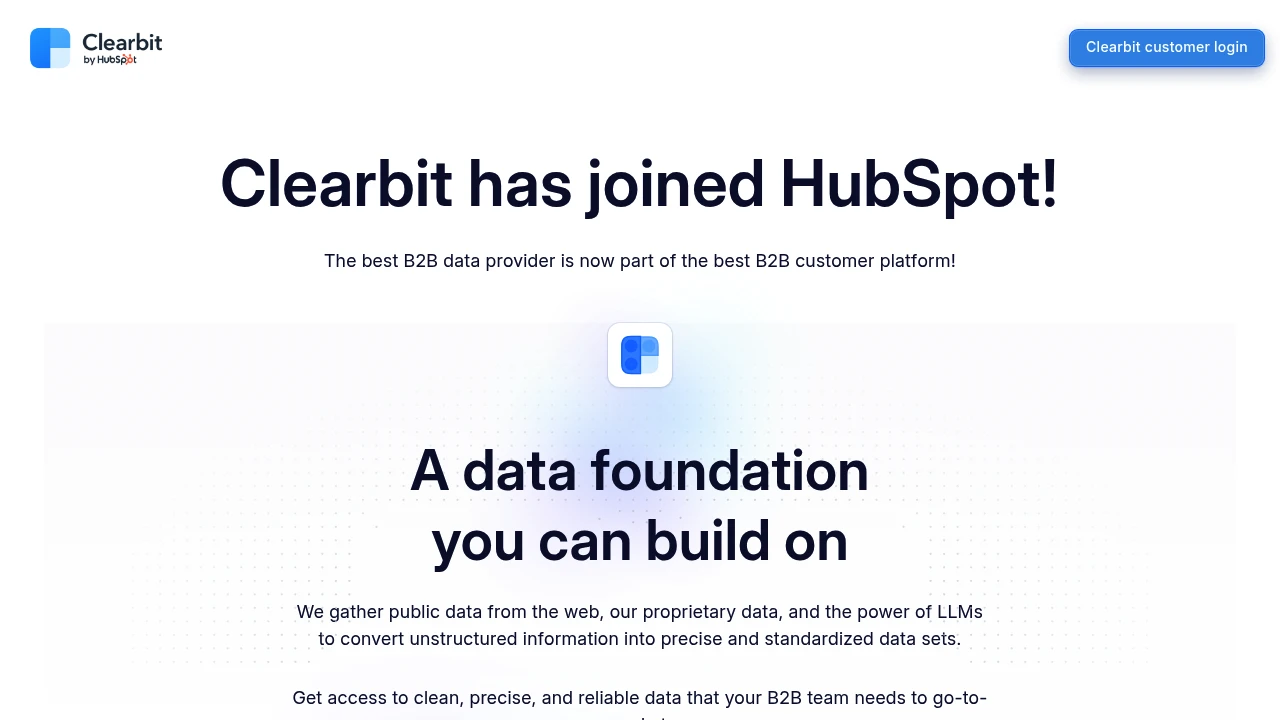
Clearbit is HubSpot's native data provider, offering B2B data enrichment, lead scoring, routing, and visitor intent identification to focus on high-value opportunities.
Summary
Clearbit is HubSpot's native B2B data provider, using AI to enrich lead and account records, deliver real-time scoring, routing, and buyer intent identification, solving incomplete data and lead prioritization challenges.
What is Clearbit?
Clearbit has joined HubSpot as the first native data provider. It combines public web data, proprietary datasets, and large language models to transform unstructured information into standardized B2B data. Teams can enrich every lead, contact, and account record, and use IP intelligence to identify buying intent from anonymous website visitors.
Core Capabilities
- Record enrichment: Global coverage to auto-populate lead, contact, and account data
- Real-time scoring & routing: Score and assign leads based on industry, corporate hierarchy, normalized role, and seniority
- Buyer intent identification: Turn anonymous website traffic into qualified opportunity signals matching your ideal customer profile
- Form shortening: Collect only email addresses, auto-enrich other fields to reduce friction
- Standardized categorization: 6-digit NAICS, GICS, SIC industry codes and corporate hierarchy structures
Pros
- Native HubSpot integration eliminates need for additional tools
- AI-driven data standardization improves accuracy and coverage
- Real-time lead scoring and routing accelerates response times
- IP intelligence uncovers hidden opportunities from anonymous visitors
- Dynamic form shortening boosts conversion while ensuring data completeness
Cons
- HubSpot-only availability, no support for other CRM platforms
- Pricing not publicly disclosed, requires sales contact
- Data accuracy depends on public sources and AI models, potential for errors
- Global coverage may be limited in certain regions
Decision Guidance
When to use: Your team runs on HubSpot and needs automated data enrichment, real-time lead scoring, or website visitor intent identification—especially B2B sales and marketing teams wanting to focus on high-fit opportunities.
Consider alternatives: You use Salesforce, Pipedrive, or other CRMs, or need standalone data enrichment tools with transparent pricing.

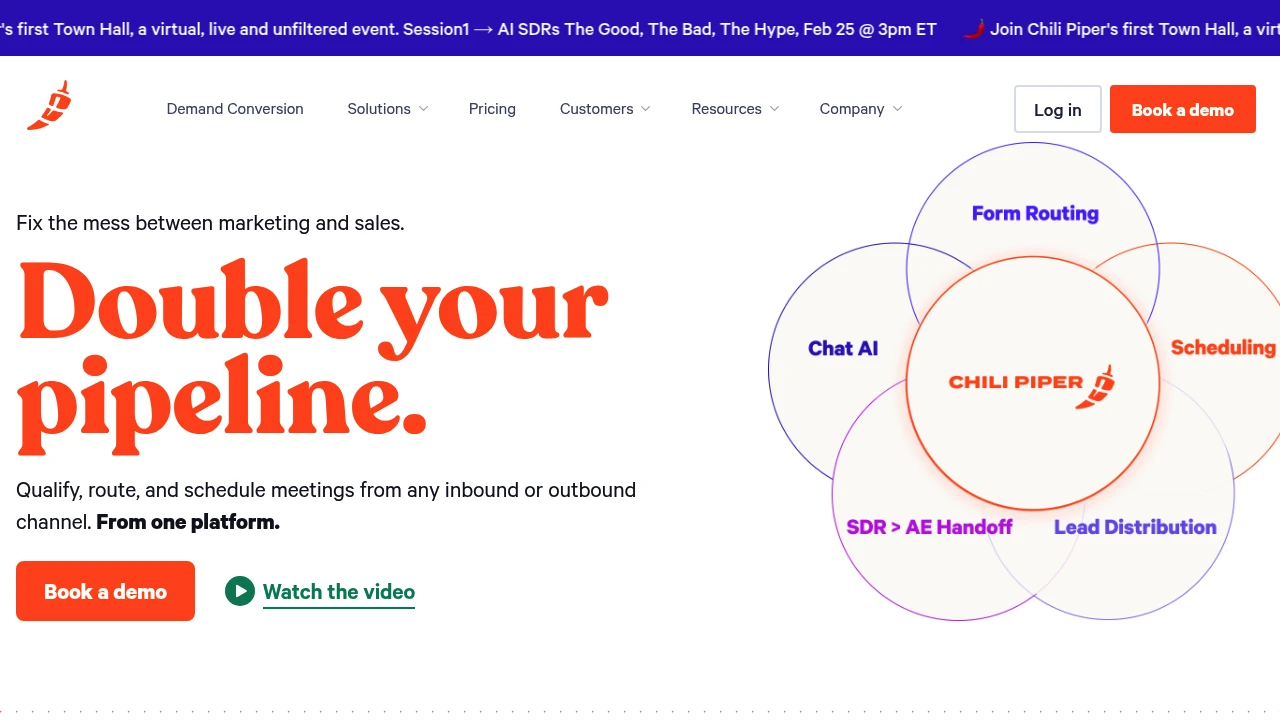
Chili Piper is a demand conversion platform that integrates form routing, chat AI, meeting scheduling, and lead distribution to automate sales workflows and convert inbound and outbound leads into qualified meetings instantly.
Summary
Chili Piper is a demand conversion platform that integrates form routing, chat AI, meeting scheduling, and lead distribution to help sales and marketing teams instantly convert inbound and outbound leads into qualified meetings, solving the process gap between marketing and sales.
What is Chili Piper?
Chili Piper is a demand conversion platform built for B2B teams, consolidating form routing (Concierge), chat AI, meeting scheduling (ChiliCal), team handoff (Handoff), and lead distribution (Distro) into one platform. The system converts website visitors, form submissions, chat inquiries, and outbound contacts into scheduled sales meetings through real-time qualification, intelligent routing, and automated scheduling, with instant CRM updates.
Core Capabilities
- Concierge (Form Routing): Qualify, route, and schedule meetings instantly from web forms
- Chat AI: Answer questions, qualify leads, and book meetings 24/7 automatically
- ChiliCal (Scheduling): One-click email booking with automatic rearrangement for priority meetings
- Handoff (Team Handoff): Automate SDR-to-AE meeting assignment and scheduling
- Distro (Lead Distribution): Auto-assign records based on complex rules and CRM ownership, enforce SLAs
- Flow Builder: Connect all touchpoints into unified workflows
- Shared Routing Logic: Share users, teams, and routing settings across all solutions
- Consolidated Reporting: Aggregate all demand conversion data in one platform
Pros
- Converts leads into scheduled meetings in real time, reducing leakage
- Single platform consolidates multiple functions, lowering tool costs and maintenance complexity
- Automates routing and scheduling, cutting admin work for sales and SDR teams
- Real-time CRM updates improve data accuracy and visibility
- Customer reports show 70-85% meeting conversion lift, 25% faster scheduling
Cons
- Requires integration with existing CRM and marketing automation tools; initial setup can be complex
- Routing logic and qualification rules need careful configuration to maximize value
- Pricing not publicly disclosed; may be a cost concern for smaller teams
- Primarily designed for B2B sales processes, not suitable for B2C or simple booking needs
- Relies on real-time lead interaction; may not fit long sales cycles or offline processes
Decision Guidance
When to use: Your team handles high volumes of inbound leads (forms, chat, G2, etc.) and needs real-time qualification and meeting scheduling; you want to automate SDR-to-AE handoff or enforce lead distribution SLAs; you want to consolidate multiple tools (form routing, chat, scheduling) into one platform to reduce cost and complexity.
When to consider alternatives: Your sales process is primarily outbound and doesn't require instant scheduling; you only need basic calendar scheduling without routing or qualification; your team is small with limited budget and can't afford an enterprise-grade platform; your business is B2C or requires a simple appointment system rather than complex sales workflows.

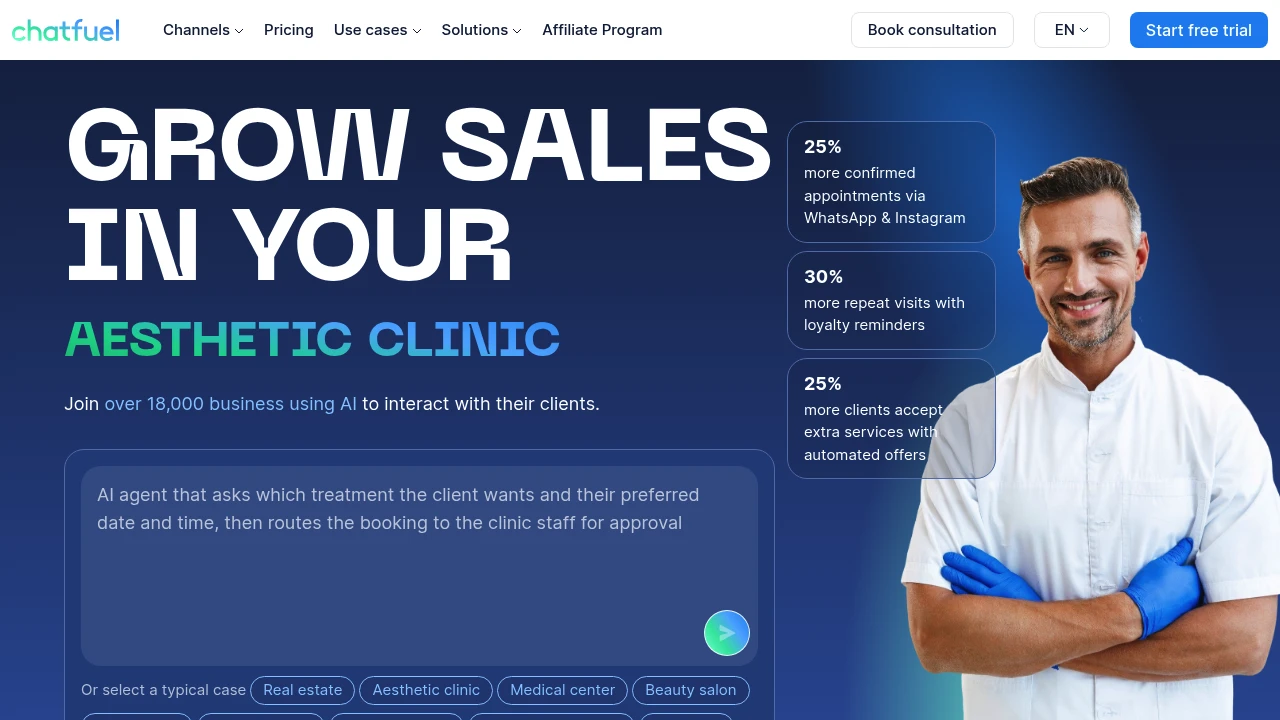
Chatfuel is an official WhatsApp Business API partner. Automate customer support, bookings, and follow-ups on WhatsApp and Instagram with ChatGPT-powered AI for SMBs.
Summary
Chatfuel is a lightweight automation platform for WhatsApp and Instagram-first SMBs, combining customer messaging, bookings, follow-ups, and AI chatbots to convert leads 24/7 without complex CRMs.
What is Chatfuel?
Chatfuel is an official WhatsApp Business API partner offering a single platform to manage customer conversations across WhatsApp, Facebook, Instagram, and TikTok. Built-in ChatGPT-powered AI agents auto-reply to inquiries, handle bookings, and send personalized follow-ups—ideal for beauty clinics, real estate, restaurants, and other messaging-driven businesses. No coding required; setup takes minutes.
Core Capabilities
- Multi-channel messaging hub: Unified inbox for WhatsApp, Instagram, Facebook, TikTok with full conversation history
- AI-powered automation: ChatGPT understands long voice messages and customer context, pre-qualifies leads 24/7
- Booking and payment integrations: Connects to Calendly, Stripe, Shopify, Zapier, and more
- Broadcasts and reminders: Auto-send loyalty nudges and upsell offers to boost repeat visits
- Human handoff: Switch from AI to live agent anytime
Pros
- Quick setup: No coding; launch in minutes
- 24/7 conversion: AI agents reply and book while you sleep
- Lightweight design: Simpler than traditional CRMs, focused on messaging-driven needs
- Integrates with your tools: Stripe, Calendly, Google Sheets, and more
- Round-the-clock support: Multilingual team ready to help
Cons
- Limited depth: Not suited for complex sales pipelines or enterprise-grade CRM needs
- Channel dependency: Primarily WhatsApp/Instagram; not an omnichannel solution
- AI accuracy: Complex queries may require human intervention
- Pricing transparency: Full pricing structure requires contact after free trial
Decision Guidance
Use Chatfuel if: You run a beauty clinic, real estate agency, restaurant, or local service business that relies on WhatsApp/Instagram for customer contact and need automated bookings, follow-ups, and lead qualification without CRM complexity.
Consider alternatives if: You need enterprise CRM, complex sales pipeline management, or rely primarily on email and phone (not messaging) channels.

6sense is a B2B predictive intelligence platform that uses AI to identify buyer intent, optimize marketing and sales strategies, and boost conversion rates.
6sense
6sense is a B2B predictive intelligence platform that helps companies identify prospects actively researching their products, optimize marketing and sales workflows, and drive revenue growth.
What is 6sense?
6sense uses AI and big data analytics to track anonymous buyer behavior, predict purchase intent, and enable marketing and sales teams to engage high-value prospects at the right moment. The platform integrates multi-channel data to deliver account-level insights, helping B2B organizations shorten sales cycles and improve close rates.
Core Capabilities
- Buyer intent data: Track anonymous research behavior and identify demand signals
- Predictive analytics: AI scores account likelihood and timing to purchase
- Account prioritization: Automatically flag high-value target accounts
- Multi-channel orchestration: Personalize interactions across ads, email, and web
- Sales intelligence: Real-time alerts on key account activity
Pros
- Discover potential buyers early and gain competitive advantage
- AI-driven account prioritization boosts team efficiency
- Unified view of marketing and sales data
- Shortens sales cycles and increases conversion rates
- Supports enterprise-scale ABM strategies
Cons
- High cost creates budget pressure for SMBs
- Requires sufficient data volume to deliver value
- Steep learning curve and need for dedicated management
- Some features depend on third-party data sources
- Initial setup and integration can be time-intensive
Decision Guidance
Best for: B2B enterprises running account-based marketing (ABM) that need to predict buyer intent, optimize high-value customer acquisition, and have adequate budget and data infrastructure.
Consider alternatives: Smaller businesses with limited budgets, shorter sales cycles, or smaller customer bases may find better value in lower-cost CRM or marketing automation tools.


